

If you’re selling online or thinking about it, the Arab e-commerce market is one you can’t ignore. People are shopping more on their phones, trying new payment methods, and expecting quick, clear experiences. At the same time, local habits, trust, and delivery challenges make doing business here different from other regions.
In this article, you’ll see why e-commerce in Arab countries matters right now, what makes it unique, the main opportunities and challenges, and practical steps you can take to grow your business across the region.
Why the Arab E-Commerce Market Matters Now?
The Arab e-commerce market is growing faster than ever, and it’s starting to grab attention worldwide. More people are shopping online, mobile usage is soaring, and digital payments are becoming common. Understanding why e-commerce in Arab countries matters now helps you see where the opportunities are and why you shouldn’t wait to join the market.
1- What’s changed in online buying behavior across the region?
You’ve probably noticed that shopping habits in the Arab world are changing fast. More people are now browsing on mobile, using apps, and expecting a fast, convenient checkout experience. With e-commerce in Arab countries, customers are no longer just looking for products they want speed, transparency, and personalized recommendations that match their lifestyle.
2- Why “building a store” is no longer enough to compete
If you think setting up an online store is enough, think again. Today, shoppers compare prices, read reviews, and expect interactive features before buying. For Arab e-commerce platforms, this means you need more than just a website; you must provide clear product info, easy navigation, and options like quick payments and reliable delivery to stay competitive.
What Makes E-Commerce in Arab Countries Different?
Shopping online in the Arab world isn’t the same as in other regions. Local preferences, trust issues, and delivery challenges all shape how people buy. Understanding these differences is key if you want your e-commerce in Arab countries to succeed.
1- Payment preferences and how they impact conversion
Many buyers in the Middle East still prefer cash-on-delivery, even for online shopping. But digital wallets and cards are growing. Understanding these preferences is crucial, because online payments in Arab countries can directly influence whether someone completes a purchase or abandons their cart.
2- Trust and after-sales support as a decisive factor
You know that feeling when you hesitate to buy because you’re unsure if support will help if something goes wrong? In the Arab world, trust matters a lot. E-commerce in Arab countries often succeeds when platforms provide responsive customer service, clear return policies, and transparent communication.
3- Logistics, addressing, and last-mile delivery as recurring bottlenecks
Even if your store looks perfect online, a delayed delivery can frustrate customers. Many areas in the Middle East still face challenges with addressing and last-mile delivery. Efficient e-commerce logistics in the Middle East can make or break your reputation and repeat business.

Key Opportunities for E-Commerce in the Arab World (2026)
The Arab world is shifting fast in how people shop online, creating more chances for sellers to grow. E-commerce in Arab countries is now about reaching wider audiences, trying new formats, and tapping opportunities that weren’t possible before.
1- Cross-border commerce across MENA and beyond
Selling across countries in the region is growing faster than ever. Customers in the Gulf, Levant, and North Africa are open to products from neighboring markets. Focusing on cross-border e-commerce MENA allows you to reach new audiences and tap into demand that local stores alone can’t satisfy.
2- Social commerce growth and short-form video selling
People are spending hours on social media, discovering products through short videos and influencer recommendations. Using social media to sell is now a major trend in e-commerce Arab world, helping you reach audiences in a more casual, interactive way.
3- Digital shift in traditional retail categories
Even traditional sectors like groceries, electronics, and fashion are moving online. As a seller, you can capture new customers by offering online options for products people once bought only in stores. This shift shows the potential of digital commerce MENA for brands ready to adapt.
4- B2B and wholesale e-commerce expansion
It’s not just consumers shopping online; businesses are also buying in bulk online. Platforms that serve wholesale buyers can tap into growing demand for Arab e-commerce platforms that simplify bulk ordering, invoicing, and delivery for companies in the region.
High-Growth Segments to Watch
Not every product sells the same way in the Arab e-commerce market. Some categories catch attention faster, while others rely on repeat purchases or digital delivery. Knowing where growth is happening helps you focus your efforts and target the right audience. E-commerce in Arab countries is increasingly shaped by these fast-moving and repeat-driven segments.
1- Fast-decision consumer categories
Certain products, like snacks, beauty items, or trending gadgets, encourage quick purchases. Customers often decide within minutes, so your listings need to be clear and attractive. Focusing on e-commerce Arab world trends can help you tap these high-velocity categories.
2- Repeat-purchase and replenishment products
Items like groceries, household supplies, or personal care products are bought regularly. Setting up subscriptions or easy reordering boosts retention. Digital commerce MENA shows strong potential for these repeat-purchase models.
3- Digital products and service-based commerce
E-books, online courses, streaming subscriptions, and virtual services are growing fast. These products have low delivery friction and high scalability, making them ideal for Arab e-commerce platforms.
4- B2B procurement and recurring business orders
Businesses need supplies, equipment, and software on a regular basis. Platforms that simplify bulk buying and invoicing tap into the expanding cross-border e-commerce MENA segment.
The Biggest Challenges in Arab E-Commerce
While opportunities are strong, running an online business in the region comes with hurdles. From payments to delivery, understanding these challenges helps you plan better and avoid costly mistakes. E-commerce logistics in the Middle East is often at the center of these recurring issues.
1- Rising customer acquisition costs and volatile ad performance
Ads are expensive, and performance can fluctuate based on trends and seasons. Knowing where to spend helps you manage budgets for e-commerce in Arab countries effectively.
2- Payment failures, refusals, and disputes
Transactions can fail due to card issues, cash-on-delivery cancellations, or bank limits. Addressing these is crucial for smooth online payments in Arab countries.
3- Delivery delays, failed delivery attempts, and returns
Even a small delay can frustrate customers. Reliable tracking and local delivery partnerships are key to tackling e-commerce logistics in the Middle East.
4- Weak product content driving higher return rates
Vague descriptions or poor images make buyers uncertain and increase returns. Clear product pages help improve conversion for Arab e-commerce platforms.
5- Tool fragmentation across marketing, operations, and reporting
Using too many disconnected tools slows operations and creates errors. A unified approach boosts efficiency and growth in digital commerce MENA.
Practical Moves to Reduce Risk and Improve Growth
To succeed, it’s not enough to know opportunities and challenges you need concrete steps. Focusing on conversions, trust, and smoother operations can make a big difference in e-commerce Arab world.
1- Improve conversion before scaling ad spend
Before you pour more money into ads, make sure your site actually encourages people to buy. Small changes to your design, product copy, or checkout process can have a big impact on how many visitors turn into customers.
2- Build trust fast: shipping, returns, support, and proof signals
You want your customers to feel confident when they buy from you. Make sure your return policies are clear, your reviews are visible, and your support is easy to reach. Trust is what keeps people coming back in Arab e-commerce platforms.
3- Simplify operations: orders, shipping, support, analytics in one flow
When you integrate orders, shipping, customer support, and analytics, you reduce mistakes and delays. Keeping everything in one flow makes your life easier and your customers happier.
4- Reduce returns at the product page level (clarity + expectations)
You can prevent unnecessary returns by making your product pages clear. Use multiple images, detailed descriptions, and precise sizing or specs. When customers know exactly what they’re getting, satisfaction rises and your operations run smoother in e-commerce in Arab countries.

Cross-Border Expansion: What You Actually Need
Selling beyond your home country can open big opportunities, but only if you plan carefully. Cross-border e-commerce MENA is growing, and you need to make it easy for customers to buy without confusion or frustration.
1- Clear shipping, pricing, taxes, and currency handling
You need to make costs completely transparent. Customers shouldn’t have to guess shipping fees, taxes, or currency conversions. When you handle all of this clearly, it reduces abandoned carts and builds confidence.
2- A return policy that still works across multiple countries
Even if a sale is international, you need a returns process that’s simple and trustworthy. When you show customers they can return items hassle-free, they’re more likely to complete a purchase in Arab e-commerce platforms.
3- Language support to reduce friction during negotiation and purchase
You want your buyers to feel understood. Offering support in local languages makes the buying experience smoother and helps prevent misunderstandings, which is essential for e-commerce in Arab countries.
Growth Channels That Work in the Region
Once you have a solid store and operations, you need the right ways to attract and keep customers. Focusing on proven channels helps you grow efficiently in the e-commerce Arab world.
1- SEO for stores: category + product pages, not just blog content
Don’t just focus on blogging. Make sure your product and category pages are optimized so people can actually find what you sell. Good SEO drives traffic that’s ready to buy.
2- Paid ads: tighter structure to reduce waste and protect margins
When you run ads, structure them carefully to avoid overspending. Proper targeting and budgeting help you get more sales without eating into your profits.
3- Social commerce: creator-style content + retargeting loops
You should tap into social media trends by sharing engaging, creator-style content. Pair this with retargeting to remind interested shoppers to complete their purchase this works especially well for digital commerce MENA.
4- Retention: post-purchase messaging and repeat-order systems
Your work doesn’t stop after the first sale. Sending follow-up messages, reminders, and reorder prompts keeps customers coming back. Retention drives sustainable growth in Arab e-commerce platforms.
How to Choose the Right Platform for the Arab Market?
Picking the right platform can make all the difference when you’re selling online. You want something that works smoothly for your operations and fits the habits of local shoppers. Arab e-commerce platforms often differ in how they handle payments, shipping, and mobile experiences, so it pays to choose carefully.
1- Local payment and shipping readiness
You need a platform that supports the payment methods your customers prefer—cash-on-delivery, cards, or digital wallets and handles shipping efficiently. When this is ready from day one, you reduce friction and abandoned carts.
2- Mobile performance and checkout UX
Most people in the Arab world browse and buy on mobile. You want your platform to be fast, responsive, and easy to navigate so checkout feels effortless. Good mobile UX directly affects e-commerce in Arab countries conversions.
3- Clear operations management: products, orders, customers, reporting
You should be able to manage your products, track orders, handle customers, and access reports in one place. Platforms that combine these features save you time and reduce mistakes in digital commerce MENA.
4- Scalability: local → regional → global
You want a platform that lets you grow from your local market to regional and even global sales without switching systems. Scalability ensures your efforts pay off over time in Arab e-commerce platforms.
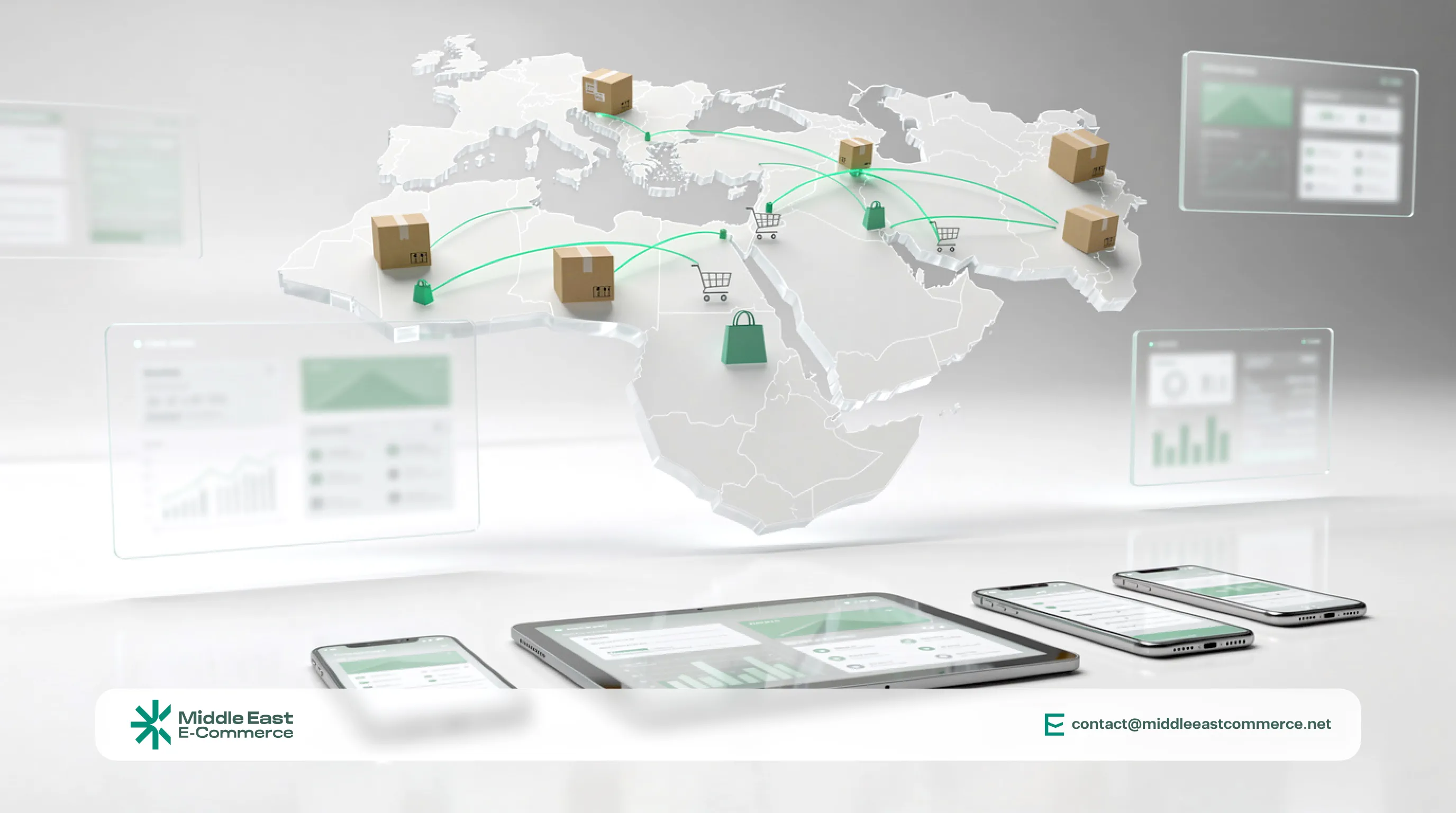
Why Middle East Fits E-Commerce in the Arab World?
If you’re serious about selling in the region, using a platform that’s built for it helps you move faster. Middle East provides tools and features designed for the unique challenges of the Arab e-commerce market, letting you focus on growth instead of firefighting.
1- A unified ecosystem that reduces tool fragmentation
You don’t need separate systems for marketing, operations, or reporting. Middle East combines them so you can work smarter, not harder.
2- Cross-border selling with fewer language barriers via AI capabilities
You can reach buyers in multiple countries without getting stuck in translation issues. AI features make communication smoother for cross-border e-commerce MENA.
3- In-platform communication that improves trust and speeds closure
You can chat with customers, confirm orders, and answer questions directly inside the platform. Faster communication builds trust in Arab e-commerce platforms and speeds up sales.
4- Performance insights that support faster operational decisions
Middle East gives you actionable analytics, so you can make decisions quickly, optimize operations, and spot opportunities early in e-commerce Arab world.
A Simple Go-To-Market Plan for Arab E-Commerce
You don’t need to overcomplicate things when launching in the region. A focused, step-by-step plan can help you start small, test, and grow sustainably. E-commerce in Arab countries rewards businesses that move strategically rather than rushing in blindly.
1- Start with one measurable, profitable category
Pick one product category that’s easy to track and profitable. Focus your efforts there before expanding.
2- Build trust pages and a clear shipping/returns policy
Make it easy for your customers to trust you by having clear policies and visible trust signals. This encourages repeat purchases and lowers hesitations in Arab e-commerce platforms.
3- Launch short test campaigns with controlled budgets
You don’t have to spend a lot at first. Run small, measurable campaigns to see what works, then refine your approach.
4- Optimize conversion, then scale regionally
Before expanding, make sure your store converts well. Once it does, you can scale across the region using Middle East to manage operations and track growth efficiently.
FAQs About E-Commerce in the Arab World
1- What’s the biggest opportunity for e-commerce in Arab countries in 2026?
If you’re looking for the biggest growth area, cross-border commerce is hard to ignore. Expanding your sales to multiple countries in the region lets you reach more customers, tap into rising demand, and benefit from cross-border e-commerce MENA trends.
2- What’s the first challenge that slows e-commerce growth in the region?
You’ll often find that payment issues are the main bottleneck. From failed transactions to cash-on-delivery complications, handling online payments in Arab countries efficiently is key to reducing abandoned carts and improving customer trust.
3- How do you scale cross-border e-commerce from the Arab world?
Start by ensuring your shipping, taxes, returns, and language support are all ready for multiple markets. Using a platform built for the region, like Arab e-commerce platforms, helps you manage operations smoothly while reaching buyers across borders.
4- How do you pick the best e-commerce platform for MENA?
Look for a platform that supports local payments, mobile-friendly checkout, clear operations management, and scalability. When you choose the right system, it makes running your business easier and sets you up to grow successfully in e-commerce in Arab countries.
Conversation
Comments
Be the first to comment.
Leave a comment