
If you want to grow your online store in 2026, e-commerce marketing isn’t just about running ads or posting on social media. It’s about guiding your customers through every step of their journey from discovering your brand to becoming loyal buyers. In this guide, you’ll learn how to create a full e-commerce marketing strategy that covers SEO, paid ads, content, social media, email, and retention tactics.
You’ll also see how to measure what really matters, avoid common mistakes, and use tools and insights to make smarter decisions.
What E-Commerce Marketing Really Means in 2026?
E-commerce marketing today isn’t just about running ads or posting on social media. At its core, e-commerce marketing is about guiding a customer from first hearing about your brand to becoming a loyal buyer. It includes understanding their needs, showing value, and keeping them engaged over time. In 2026, the focus is on clear, measurable results that actually grow your business, not just boosting numbers like page views or clicks.
1- Marketing is the full funnel: acquisition + conversion + retention
A strong e-commerce marketing strategy covers the entire journey. Acquisition brings new visitors to your site, conversion turns those visitors into paying customers, and retention keeps them coming back.
For example, a brand might use search ads to attract new customers, an email campaign to encourage first purchases, and loyalty programs to maintain engagement. Thinking in full-funnel terms ensures every marketing effort contributes to meaningful growth.
2- The real goal: profitable growth, not “traffic”
Many businesses still measure success by traffic alone, but the real goal of e-commerce marketing solutions is profitable growth. This means not just attracting visitors, but converting them efficiently and generating revenue that exceeds your marketing spend.
For instance, running targeted promotions for high-margin products or focusing on repeat buyers often delivers better long-term results than simply increasing site visits.
The E-Commerce Marketing Funnel
Understanding the e-commerce marketing funnel helps you plan campaigns for each stage of the customer journey. The funnel has four key stages, each requiring different approaches and tools.
1- Awareness (new demand)
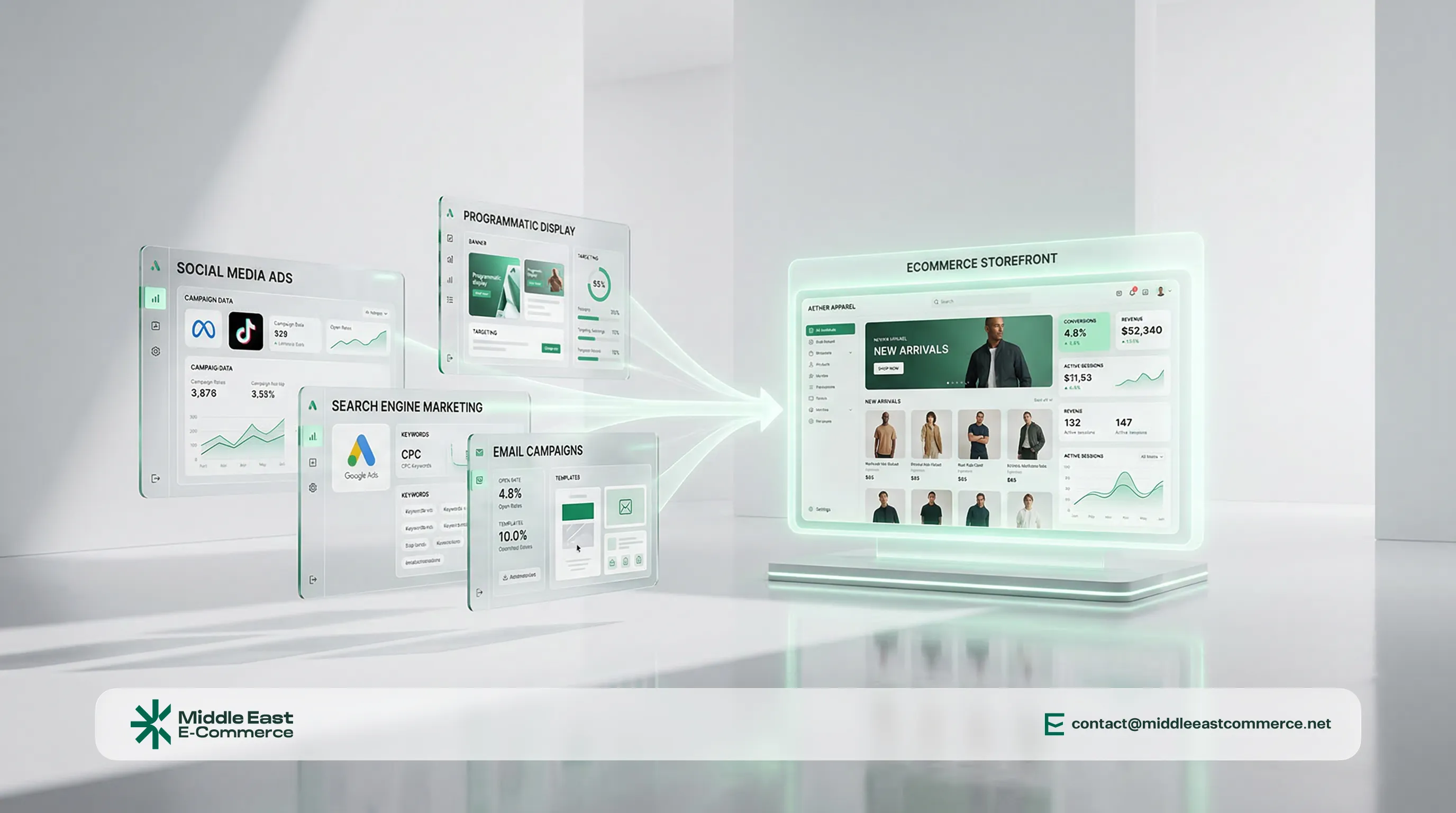
At the awareness stage, potential customers are just discovering your brand. E commerce advertising plays a critical role here. Social media campaigns, influencer partnerships, and display ads can help introduce your brand to people who didn’t know you existed. The focus should be on clear messaging and visually appealing content that grabs attention without overwhelming the audience.
2- Consideration (proof + comparison)
Once people are aware, they start comparing options. Content like product guides, comparison charts, reviews, and testimonials helps build trust. Content marketing for ecommerce works well here because it gives buyers helpful information while subtly highlighting why your products are a good fit. For example, a video showing your product in real-life situations can answer common questions and reduce hesitation before purchase.
3- Conversion (offer + checkout + trust)
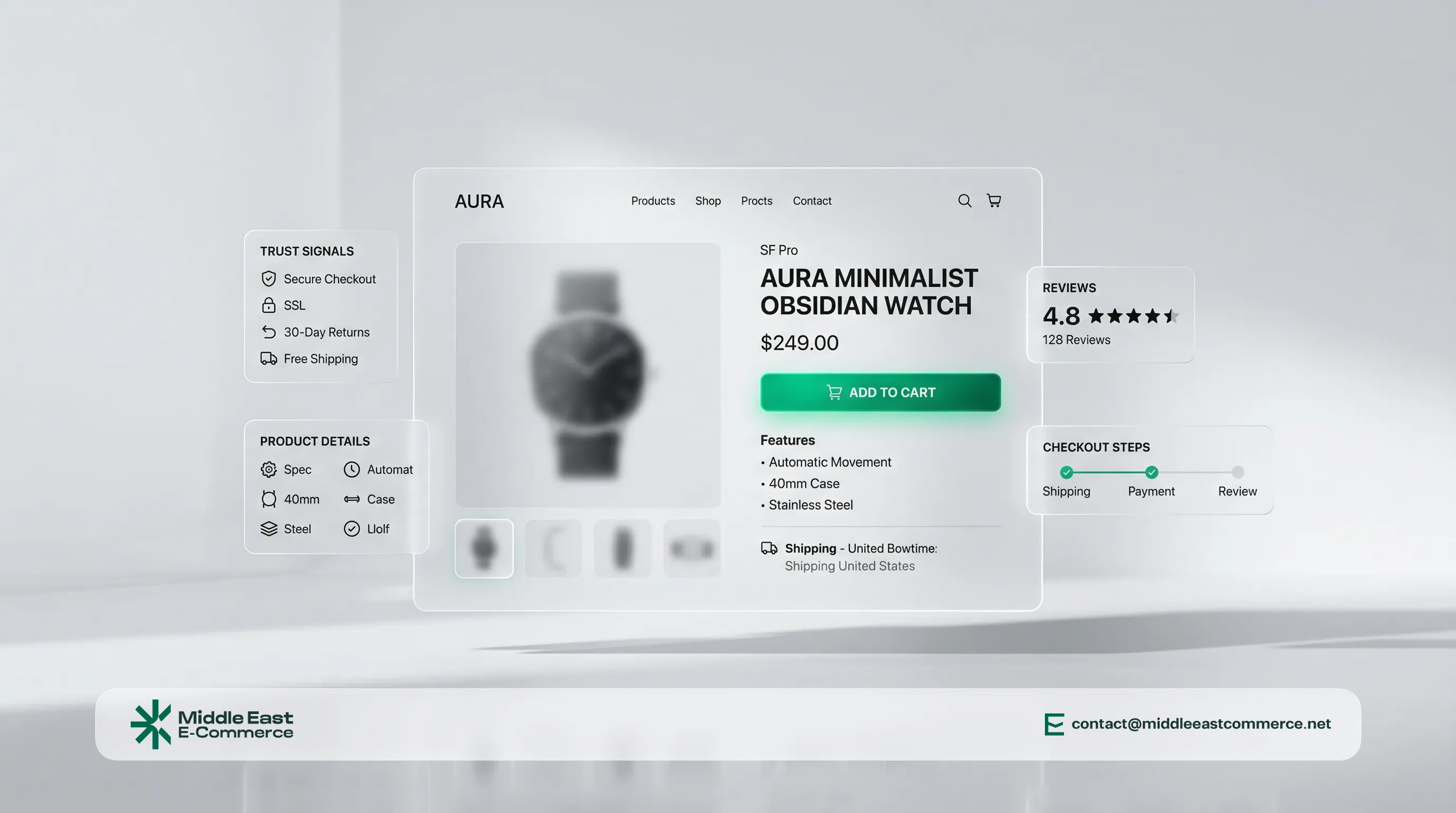
The conversion stage is where visitors make the purchase. Tools like clear product descriptions, simple checkout flows, and trust signals such as secure payment badges or money-back guarantees are essential. PPC for e commerce campaigns can also drive highly motivated buyers to this stage.
4- Retention (repeat purchases + LTV growth)
Retention focuses on keeping customers coming back and increasing their lifetime value. Email marketing for ecommerce is especially effective here. Sending personalized recommendations, special offers, or reminders about products customers have shown interest in encourages repeat purchases. Brands that maintain regular, thoughtful communication often see higher loyalty and more predictable revenue streams.
Pre-Marketing Foundations (Before You Scale Spend)
Before spending on ads, get the basics right. E-commerce marketing strategy starts with a clear offer: price, value, and what makes you different. Product pages should be clear and trustworthy. Track conversions and set up attribution. Collect emails and SMS with consent to build a lasting audience.
1- Offer clarity: price, value, and differentiation
Customers buy when they understand the offer. E-commerce marketing works best when your unique features are clear. Show why your product is better or different.
2- Product page quality and trust pages
Good pages increase sales. E commerce marketing solutions need clear images, descriptions, reviews, and secure checkout signs to build trust.
3- Tracking and measurement basics (events + attribution)
You can’t improve what you don’t measure. E commerce advertising is effective when you track which campaigns drive purchases. Set up events and attribution so you know what’s working.
4- Email/SMS capture and consent
Email marketing for ecommerce lets you send updates, recommendations, and offers. Always get consent so you build trust and comply with rules.
SEO for E-Commerce (Store SEO)
E-commerce SEO helps your store show up when people search for products like yours.
1- Keyword mapping: category pages vs product pages
Not every page should target the same words. Category pages are for broader searches, and product pages are for people ready to buy. A smart e-commerce marketing strategy matches the right keywords to the right pages.
2- Technical SEO: speed, indexing, duplicates, schema
Make your site easy for Google and fast for visitors. E-commerce SEO works best when your pages load quickly, are indexed correctly, duplicates are removed, and schema is added.
3- On-page SEO that increases both ranking and conversion
Your content should help both search engines and customers. Content marketing for ecommerce uses titles, headings, and internal links to boost visibility and guide buyers to buy.
4- Content that sells: buying guides and comparison pages
You can help your visitors choose. E-commerce marketing solutions like buying guides or comparison pages attract people who are researching, and they make it easier for them to decide to purchase from you.
PPC for E-Commerce (Paid Ads)
Paid ads are one of the fastest ways to get sales. PPC for e commerce works best when you focus on profit, not just traffic.
1- Google Ads: Search, Shopping, Performance Max
Different campaigns reach people in different ways. E-commerce advertising on Search reaches those actively looking for what you sell. Shopping ads show your products visually. Performance Max helps you reach customers across Google channels.
2- Meta Ads: prospecting vs retargeting
You should separate new visitors from past visitors. E-commerce marketing works well when you use prospecting to reach new people and retargeting to bring back people who showed interest but didn’t buy.
3- Budget strategy: profit-first scaling
E-commerce marketing solutions focus on campaigns that already make money before you scale your spend.
4- Creative testing system (angles, offers, audiences)
E commerce advertising works best when you try different messages, offers, and audiences to see what actually drives sales.
Social Media and Social Commerce
Social media is more than posts, it’s a way to sell directly. Social media marketing for ecommerce lets you reach customers where they spend time and turn engagement into purchases.
1- Short-form video as the new product page
You can show your product in action with short videos. E-commerce marketing benefits when you let people see features, use cases, and benefits in a quick, engaging format. This often works better than static images alone.
2- Influencer and creator partnerships
You don’t have to do it all alone. E-commerce marketing solutions include teaming up with influencers or creators who already have the audience you want. They can introduce your products in an authentic way.
3- Retargeting loops to capture demand
Some visitors aren’t ready to buy at first. E commerce advertising works well when you retarget people who engaged with your content or visited your pages, keeping your brand top of mind.
4- Community signals and trust-building
You want people to feel confident buying from you. Content marketing for ecommerce includes fostering communities, showing reviews, and encouraging user interaction. Social proof builds trust and helps conversions.
Email and SMS Marketing (Retention Engine)
Email and SMS help you turn first-time buyers into loyal customers. Email marketing for ecommerce is one of the most reliable ways to boost repeat purchases and lifetime value.
1- Core flows: welcome, browse abandon, cart abandon, post-purchase
You should set up essential flows that run automatically. E-commerce marketing strategy works best when you guide people from first visit to repeat purchase with welcome emails, reminders, and post-purchase follow-ups.
2- Segmentation: new vs repeat vs high-value buyers
E-commerce marketing solutions become more effective when you segment your audience. Send different messages to new visitors, repeat buyers, and high-value customers.
3- Campaigns vs automations (when to use each)
You need both. E-commerce marketing uses campaigns for promotions or events, and automations for predictable flows like abandoned carts. Knowing when to use each saves you time and increases sales.
4- Deliverability basics and list hygiene
Your messages won’t matter if they don’t reach inboxes. Email marketing for ecommerce works better when you keep your lists clean, remove inactive contacts, and follow deliverability best practices.
Content Marketing That Drives Revenue
Good content doesn’t just attract visitors, it helps them buy. Content marketing for ecommerce works best when it guides customers through their journey, answers their questions, and makes your products easier to choose.
1- Category-led content vs blog-only content
You should focus on content that matches the pages people visit. E-commerce marketing solutions include category-led content like “Best running shoes for beginners” or “Top laptops under $1000,” which shows up on your store and helps people shop. Blog-only content is good for traffic but often doesn’t drive sales directly.
2- Product education that reduces returns
You can save money and build trust by helping buyers understand your products. E-commerce marketing benefits when you provide clear instructions, videos, or tips.
For example, showing how to measure correctly for clothes or how to set up a device reduces confusion and returns.
3- Comparison content that captures decision intent
People compare products before they buy. E-commerce marketing strategy works better when you provide comparison pages, like “Product A vs Product B,” highlighting features and differences. This helps buyers make decisions on your site instead of leaving for a competitor.
4- UGC and reviews as scalable conversion assets
User-generated content (UGC) is powerful. Content marketing for ecommerce includes customer photos, reviews, and testimonials. They act as social proof, increase trust, and often convince hesitant buyers to purchase.
Conversion Rate Optimization (CRO)
Small changes can have a big impact on sales. E-commerce marketing improves when you remove obstacles in the buying process and make it easy for customers to complete purchases.
1- Checkout simplification and friction removal
You want the checkout to be simple and fast. E-commerce marketing solutions include reducing steps, avoiding unnecessary fields, and offering multiple payment options. The easier it is, the more people finish their purchase.
2- Trust signals that reduce hesitation
Customers buy when they feel safe. E-commerce marketing works best if you show trust signals like secure payment badges, money-back guarantees, or clear shipping info. Even small reassurances can increase conversions.
3- A/B testing priorities (what to test first)
You don’t need to test everything at once. Conversion rate optimization starts with high-impact elements like headlines, product images, or call-to-action buttons. Test one thing at a time to see what actually improves results.
4- Increasing AOV: bundles, upsells, subscriptions
You can grow revenue without more customers. E-commerce marketing strategy includes offering bundles, upsells, or subscription options. For example, suggesting a matching accessory or a monthly subscription encourages customers to spend more per order.
Analytics and Measurement for E-Commerce Marketing
You need numbers to make smart decisions. E-commerce marketing solutions are effective when you track the metrics that matter, so you know what drives profit.
1- The numbers that matter: CAC, LTV, AOV, CVR, ROAS
Don’t just look at traffic. E-commerce marketing works when you track customer acquisition cost (CAC), lifetime value (LTV), average order value (AOV), conversion rate (CVR), and return on ad spend (ROAS). These numbers show real performance.
2- Attribution basics and tracking gaps
You need to know which channels actually create sales. E-commerce marketing strategy benefits when you check for tracking gaps and set up attribution so you don’t waste money on channels that don’t perform.
3- Weekly marketing dashboard and decision rhythm
You should review results regularly. E-commerce marketing solutions work best if you create a simple weekly dashboard with key metrics. This lets you act quickly and adjust campaigns without guessing.
Common Mistakes in E-Commerce Marketing
You can save money and frustration by avoiding common pitfalls. E-commerce marketing fails when people focus on the wrong things.
1- Scaling ads before fixing conversion
Don’t spend more money until your store converts visitors. E-commerce marketing strategy should ensure your pages, checkout, and flows work well before increasing ad spend.
2- Running discounts that destroy margin
Big discounts attract buyers, but they can hurt profit. E-commerce marketing solutions work best when you plan promotions that maintain your margins. Think about upsells or bundles instead of only cutting prices.
3- Measuring ROAS without profit
Return on ad spend (ROAS) can be misleading. E-commerce marketing is effective when you measure profit, not just revenue, so you know which campaigns actually make money.
4- Ignoring retention and repeat purchases
Getting a new customer is expensive. E-commerce marketing strategy succeeds when you focus on retention. Use email, SMS, and loyalty tactics to turn first-time buyers into repeat customers.
Why Middle East Supports Stronger E-Commerce Marketing?
The Middle East provides unique advantages for your e-commerce efforts. E-commerce marketing strategy works better here because the ecosystem is unified, making it easier to manage tools, communicate with customers, and scale across borders.
1- A unified ecosystem that reduces tool fragmentation
You don’t have to juggle multiple disconnected tools. E-commerce marketing solutions work more efficiently when platforms integrate payment, logistics, advertising, and customer communication in one place. This saves time and reduces errors.
2- In-platform communication that improves conversion confidence
Talking to customers directly inside the platform helps you close sales. E-commerce marketing benefits when you answer questions, share updates, or provide support without making buyers leave the site. This builds trust and increases conversion.
3- AI-enabled features that reduce language friction cross-border
Selling across countries is easier with AI tools. E commerce advertising can translate product descriptions, suggest localized campaigns, and adapt messaging so language isn’t a barrier for your buyers.
4- Performance insights to guide faster marketing decisions
You want to know what works quickly. E-commerce marketing solutions give you dashboards, reports, and insights so you can act on results faster, adjust campaigns, and avoid wasting money.
FAQs About E-Commerce Marketing
1- What is e-commerce marketing?
You can think of e-commerce marketing as all the ways you attract, convert, and retain customers online. It’s more than ads it includes SEO, content, email, social media, and all the strategies that drive sales.
2- What are the best e-commerce marketing channels in 2026?
You should focus on channels where your customers spend time. E-commerce marketing strategy includes a mix of SEO, PPC, social media, email, and SMS. Each has a role depending on whether you want awareness, conversions, or retention.
3- How do you combine SEO and PPC for faster growth?
You can use SEO to attract organic traffic while PPC brings immediate sales. E-commerce marketing solutions work best when these channels complement each other SEO builds long-term visibility, PPC captures ready-to-buy audiences.
4- What are the most effective retention tactics for e-commerce?
You should focus on keeping customers coming back. Email marketing for ecommerce and SMS campaigns with personalized offers, loyalty programs, and post-purchase flows are the simplest ways to increase repeat purchases and lifetime value.
Conversation
Comments
Be the first to comment.
Leave a comment