
If you run an online store, getting the right people to visit your site is often one of the biggest challenges. Waiting for organic traffic can take months, and competition is strong in most product categories. That’s why many store owners turn to PPC for e commerce to bring in visitors faster.
With paid ads, you can place your products in front of people who are already searching for similar items or browsing online. For example, someone might search for a product on Google or see an item while scrolling through social media. Your ad appears, they click, and they land directly on your product page and this gives you a chance to turn that interest into a sale.
In this guide, you’ll learn how PPC for e commerce works in 2026. We’ll walk through the main campaign types, the platforms you can use, the numbers you should track, and a few common mistakes that can quietly drain your ad budget.
Why PPC Works (and Why It Burns Budgets)
If you’re running an online store, you’ve probably noticed that traffic doesn’t always come fast enough. That’s where PPC for e-commerce can make a real difference. With paid advertising, you can get visitors to your site almost instantly but it can also eat through your budget if you’re not careful. Here’s what you need to keep in mind:
1- Speed: paid traffic can generate sales immediately
Unlike waiting for organic results, with e-commerce paid ads, people see your products right away, which can boost early revenue or test new offers quickly.
2- Control: targeting, budget, and scaling are measurable
You have a clear view of your targeting, budget, and scaling. Using Google Ads for e-commerce, you can set who sees your ads, how much you spend, and which campaigns to expand, giving you measurable control over your marketing.
3- Risk: weak product pages turn clicks into wasted spend
Even the best ads can fail if your product pages aren’t ready. Weak descriptions, slow loading, or poor images turn clicks into wasted spend. Pairing e-commerce marketing solutions with strong landing pages is key to turning visitors into buyers.
Core PPC Metrics You Must Know
Before you pour money into campaigns, you need to understand the numbers that really matter. E-commerce & digital marketing isn’t just about clicks—it’s about how those clicks turn into profit.
1- ROAS vs profit (why ROAS alone can be misleading)
Seeing a high return on ad spend can feel great, but it doesn’t tell the whole story. You could be spending more than you earn once costs are factored in. Learning to read ROAS optimization correctly helps you spot campaigns that actually make money.
2- CAC and LTV (how to decide if you can scale)
How much does it cost you to acquire a customer, and how much will that customer spend over time? Comparing e-commerce marketing solutions like CAC and LTV gives you a sense of whether scaling your ads is financially safe.
3- CTR, CVR, AOV (what each metric tells you)
Click-through rate, conversion rate, and average order value show you where your funnel might leak. Understanding these metrics with e-commerce paid ads lets you tweak campaigns and pages without throwing cash at guesswork.
Store Readiness Checklist Before You Spend
You can have perfect ads, but if your store isn’t ready, clicks won’t convert. Here’s what to check before you start spending.
1- Product page fundamentals (offer, proof, clarity)
Make sure your offer is clear, your product images and copy build trust, and customer proof is visible. Strong pages are the foundation of successful PPC for e-commerce.
2- Shipping and returns clarity (trust layer)
People won’t buy if they’re unsure about delivery or refunds. Transparent policies add a layer of trust that makes Google Ads for e-commerce more effective.
3- Checkout speed and payment reliability
Slow or glitchy checkout loses customers fast. A smooth checkout process ensures your e-commerce paid ads actually lead to completed purchases.
4- Tracking and attribution basics (events, conversions)
You need to know which clicks and campaigns drive real results. Setting up events and conversions correctly is essential for accurate e-commerce SEO reporting and ad analysis.
PPC Campaign Types for E-Commerce
Not all paid ads are the same, and knowing which type of campaign to run can save you a lot of wasted spend. Each serves a different purpose in your sales funnel.
1- Acquisition campaigns (new customers)
These are all about finding new customers. You’re reaching people who have never heard of your store before. Running Facebook Ads for e-commerce can be a great way to introduce your products to the right audience quickly.
2- Retargeting campaigns (cart recovery and warm audiences)
Some visitors leave without buying, and that’s where retargeting comes in. By reminding them about their cart or showing related products, you can recover lost sales with e-commerce paid ads that speak directly to warm audiences.
3- Brand defense campaigns (protect your store name)
If someone searches for your store by name, you don’t want competitors stealing that traffic. Protect your visibility with e-commerce advertising that keeps your brand top-of-mind and ensures potential customers find you first.
4- Upsell / AOV campaigns (increase cart size)
Once someone is buying, you can encourage them to add more to their cart. Promoting complementary products or bundles helps increase the average order value through PPC for e-commerce campaigns designed to boost revenue per customer.
The Main PPC Platforms for E-Commerce
Choosing the right platform can make a big difference in how well your campaigns perform. Each platform has its strengths depending on your audience and product type.
1- Google Ads: Search, Shopping, Performance Max
From Search to Shopping and Performance Max campaigns, Google lets you reach people who are actively looking to buy. If you want precise targeting and measurable results, Google Ads for e-commerce is a must-have in your marketing toolkit.
2- Meta Ads: Facebook + Instagram
Running campaigns on Facebook and Instagram helps you reach users based on interests, behaviors, and demographics. Using e-commerce marketing solutions here lets you engage both new and returning customers with visual and dynamic content.
3- TikTok Ads for discovery-driven products
For products that thrive on discovery and trends, TikTok is a great channel. Creative short-form videos can introduce your brand to a broad audience with e-commerce paid ads that feel authentic and engaging.
4- Supporting channels (YouTube / Snapchat / others)
You don’t have to rely on just one platform. YouTube, Snapchat, and other niche channels can reinforce your main campaigns and reach audiences in different ways. Integrating these with PPC for e-commerce helps you capture attention across multiple touchpoints.
Quick Table: Google vs Meta—When to Use Which
When planning your campaigns, it helps to know which platform fits each goal. E-commerce advertising works best when you match your strategy to the strengths of each channel. Here’s a quick guide:
Use Case | Google Ads | Meta Ads |
Capture high intent | Strong | Medium |
Product discovery | Medium | Strong |
Shopping feed scale | Strong | Medium |
Fast remarketing | Medium | Strong |
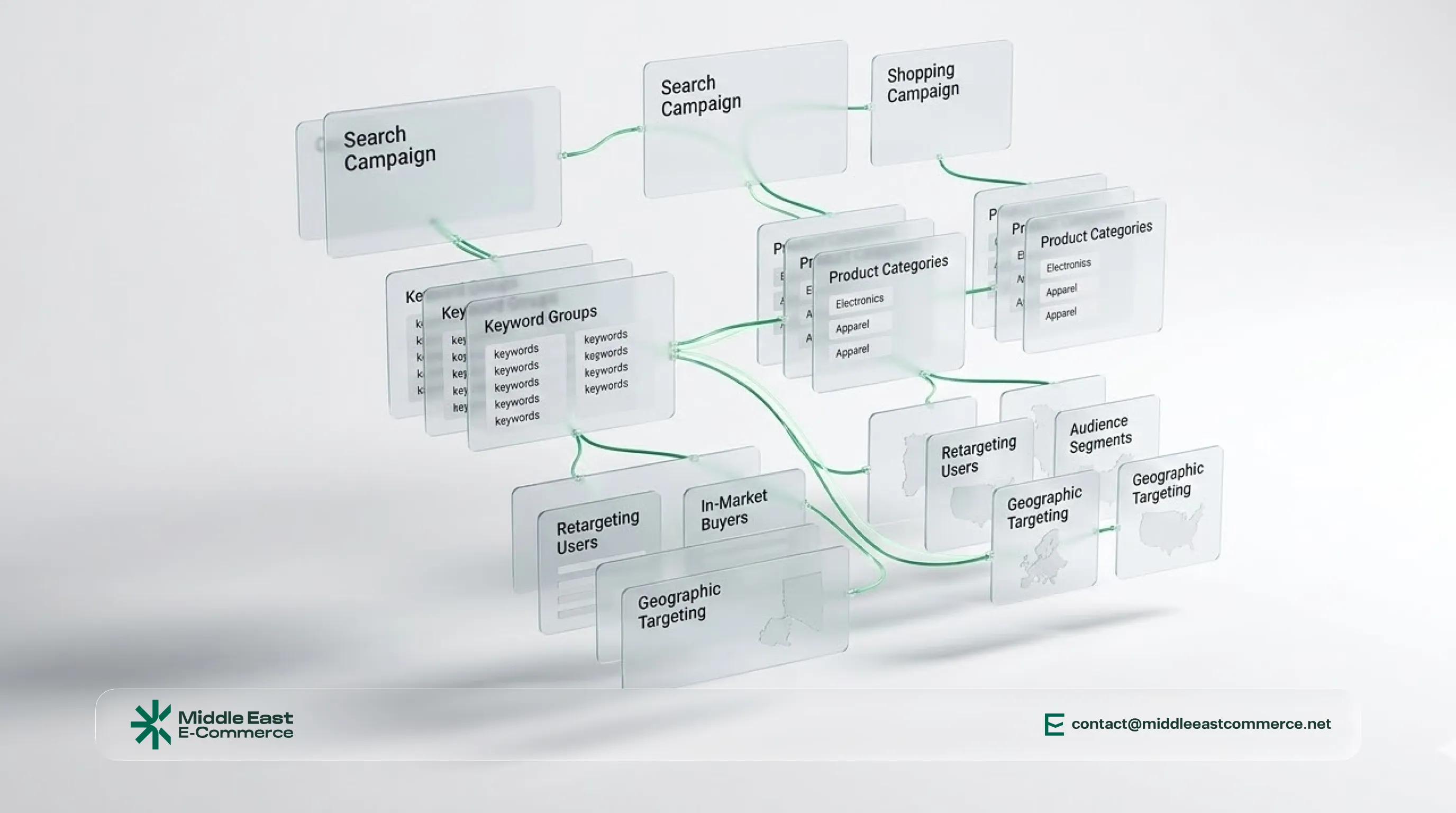
Account and Campaign Structure That Reduces Waste
The way you organize your campaigns can save a lot of wasted ad spend. A clear structure helps you focus on what works and scale with confidence.
1- Split by intent (brand vs non-brand)
Separate brand searches from non-brand ones. This ensures that your PPC for e-commerce budget isn’t wasted on clicks that don’t matter, while still protecting your brand traffic.
2- Split by profitability (winners vs long-tail)
Identify your top-performing products versus the long-tail items. Campaigns that focus on your winners give you the best return, and using e-commerce paid ads wisely on slower items prevents unnecessary spend.
3- Split by audience temperature (cold vs warm)
Cold audiences need awareness campaigns, while warm audiences respond better to remarketing. Aligning campaigns with audience readiness improves efficiency when you run e-commerce advertising.
4- Split by geo when shipping/pricing differs
If shipping costs or pricing differ by location, separate your campaigns. This lets you adjust bids and messaging accurately, making your e-commerce marketing solutions more targeted and cost-effective.
Google Search: Keywords That Sell
Keywords are the backbone of search campaigns, but not all clicks are equal. Knowing which words convert helps you spend smarter.
1- Purchase-intent keywords vs research keywords
Focus on terms that indicate people are ready to buy. Using Google Ads for e-commerce, you can capture high-intent traffic that’s more likely to convert.
2- Negative keywords as budget protection
Block searches that aren’t relevant. Adding negative keywords prevents wasted spend and keeps your PPC for e-commerce campaigns efficient.
3- Ad copy that matches intent and reduces bounce
Your text should match what people expect when they click. Aligning ads with search intent keeps visitors on your site, improving results for e-commerce paid ads campaigns.
Shopping / Feed-Based Ads: How to Improve ROAS
If you’re running feed-based campaigns, small tweaks can make a big difference in your return on ad spend. Paying attention to your product feed and how it’s structured can turn clicks into real sales.
1- Product titles and images as ad performance levers
The way your products appear in ads matters. Clear titles and high-quality images can dramatically improve click-through and conversion rates. Optimizing these elements strengthens your Google Ads for e-commerce performance.
2- Segmentation by margin and inventory priority
Not all products are equal. Highlight high-margin items or those you need to move fast. Using PPC for e-commerce strategically this way ensures your budget targets items that actually contribute to profit.
3- Fixing disapprovals and feed hygiene
Broken feeds, missing attributes, or disapproved products waste money. Keeping your feed clean and compliant helps e-commerce paid ads run smoothly without unnecessary interruptions.
Creative and Messaging: What Converts in 2026
Even with the right audience and budget, your ads won’t perform if the creative and messaging don’t connect. Focusing on clarity and trust makes a big difference in 2026.
1- One strong angle per ad (avoid clutter)
Keep your message focused. Each ad should highlight a single benefit or feature to avoid confusing viewers. This makes your e-commerce paid ads more compelling and easier to act on.
2- Trust signals (returns, delivery, reviews)
People want reassurance before they click “buy.” Show returns policies, delivery options, or customer reviews prominently. Incorporating these in your PPC for e-commerce campaigns builds credibility and reduces friction.
3- Offer clarity without over-discounting
Be clear about your deal, but don’t undervalue your products. Communicate the value convincingly so your e-commerce advertising feels smart, not desperate.
4- Systematic creative testing (not random changes)
Test methodically rather than changing everything randomly. Small, structured tests with e-commerce marketing solutions help you see what resonates and improves results over time.
ROAS Optimization: A Practical Sequence
Getting a high return on ad spend isn’t just about spending more—it’s about spending smart. Follow this sequence to make every dollar count.
1- Cut waste first (targeting + negatives + exclusions)
Start by refining targeting, adding negative keywords, and setting exclusions. Removing unqualified clicks protects your PPC for e-commerce budget from unnecessary losses.
2- Fix conversion rate before scaling spend
Don’t increase your budget if your site isn’t converting. Focus on landing pages, checkout flow, and user experience first. Improving conversions ensures your e-commerce paid ads deliver real results.
3- Reallocate budget to proven winners
Put more money behind campaigns and products that already perform. Using e-commerce advertising strategically like this maximizes efficiency and revenue.
4- Improve AOV and retention to raise allowable CAC
Increasing average order value or repeat purchase rates raises the amount you can spend to acquire customers. Focusing on these metrics helps your e-commerce marketing solutions scale without eroding profit.
Common PPC Mistakes in E-Commerce
Paid ads can bring visitors to your store quickly, but they can also drain your budget if the basics aren’t in place. Many store owners focus on traffic before checking whether their site and tracking are ready. Avoiding these mistakes helps you manage e commerce & digital marketing campaigns with more confidence.
1- Paying for traffic before product pages are ready
Imagine paying for hundreds of clicks, only to realize your product page doesn’t clearly explain what the item does or why someone should buy it. Weak photos, missing details, or confusing pricing push people away. Before spending money on PPC for e-commerce, make sure your product pages answer the most common customer questions.
2- Scaling spend without stable conversion tracking
If you can’t clearly see which ads lead to sales, increasing your budget becomes guesswork. Sometimes tracking pixels break or events aren’t set up correctly, which makes your reports unreliable. Solid tracking is essential when running e-commerce advertising, because it tells you what’s actually working.
3- Discounting into negative margins
Discounts can attract buyers, but they can also eat into your profit if you’re not careful. For example, offering 40% off while paying high ad costs might leave you with little or no margin. This happens often when stores push heavy promotions through Facebook Ads for ecommerce without calculating the real numbers.
4- Reporting ROAS without profit context
A campaign might show a strong return on ad spend, but that doesn’t automatically mean the business is making money. Costs like shipping, payment fees, and returns still matter. Looking at the full picture helps you understand whether your e-commerce paid ads are truly profitable.
The 80/20 Rule in E-Commerce Ads
In many online stores, a small portion of products and campaigns generate most of the revenue. When you analyze your data, you’ll often notice that only a few items and audiences are responsible for the majority of sales. Recognizing this pattern helps you make better decisions in e commerce & digital marketing.
1- Find the products and audiences that drive most revenue
Start by reviewing which products bring the highest sales and which audiences respond the most. Sometimes a single product category or customer segment carries most of your performance. When running PPC for e-commerce, identifying these top performers helps you focus your budget where it actually works.
2- Scale winners and cut the long-tail waste
Once you know what performs well, put more budget behind those campaigns and reduce spend on items that rarely convert. Many stores keep running ads for too many products at once. Prioritizing strong performers makes your e-commerce paid ads more efficient and easier to manage.

The 3-3-3 Rule for Faster Testing
Testing ads doesn’t need to be complicated. A simple structure can help you learn what works without creating dozens of campaigns. The 3-3-3 rule gives you a clear framework for testing ideas in e-commerce advertising.
1- 3 creatives
Create three different ad visuals or videos. Each one should present the product in a slightly different way. Running multiple creatives helps you see which message catches attention in your Facebook Ads for ecommerce campaigns.
2- 3 audiences
Test three audience groups that might be interested in your product. For example, you could try interest-based audiences, lookalike audiences, and retargeting groups when running e-commerce marketing solutions across your campaigns.
3- 3 offers/angles
Present the product from three different perspectives. One ad might highlight price, another could focus on convenience, and another might show social proof. Testing these angles helps you learn what motivates people to click on your e-commerce paid ads and complete a purchase.
Why Middle East Helps PPC Perform Better
Running ads is only part of the equation. What happens after someone clicks the ad often decides whether the campaign succeeds or fails. Platforms that simplify operations and communication can make a big difference in how well your e-commerce advertising performs. This is where the Middle East platform can support your store.
1- A smoother buyer journey after the click
When a customer clicks your ad, they expect a clear and simple path to purchase. The Middle East platform helps create a smoother buying experience, which can improve the results of your PPC for e-commerce campaigns.
2- Unified operations reduce delays and support load
Handling orders, payments, and logistics across different tools can slow things down. By bringing these processes together, the platform supports e-commerce marketing solutions that reduce delays and make store management easier.
3- In-platform communication improves conversion confidence
Customers often want quick answers before completing a purchase. When communication happens inside the same system, it becomes easier to respond quickly, which can increase trust and improve the performance of your e-commerce paid ads.
4- AI-enabled features support cross-border selling at scale
Selling to customers in different countries can add complexity to advertising and fulfillment. Built-in AI features on the Middle East platform help manage these challenges, making it easier to grow your e commerce & digital marketing campaigns across markets.
FAQs About PPC for E-Commerce
What is e-advertising in e-commerce?
E-advertising in online retail simply means promoting your products through paid ads on digital platforms. This can include search ads, social media ads, and shopping campaigns that drive people directly to your store. In practice, e-commerce advertising helps you reach shoppers who are already browsing online and looking for products like yours.
How do you increase sales using paid ads?
The key is not just getting clicks but guiding people toward a purchase. Start with clear product pages, strong images, and simple offers. Then target the right audiences and test different messages to see what resonates. When managed carefully, PPC for e-commerce helps bring in visitors who are more likely to buy.
What is the 80/20 rule in PPC for e-commerce?
The 80/20 rule suggests that a small portion of your campaigns or products often generates most of your revenue. For example, a few best-selling products might bring the majority of your sales. Identifying these patterns allows you to focus your e-commerce paid ads budget on the items and audiences that perform best.
What is the 3-3-3 rule for ad testing?
The 3-3-3 rule is a simple testing method used in e commerce & digital marketing. You test three different ad creatives, show them to three audience groups, and experiment with three offers or messaging angles. This approach helps you quickly see which combination attracts attention and leads to more conversions.
Conversation
Comments
Be the first to comment.
Leave a comment