
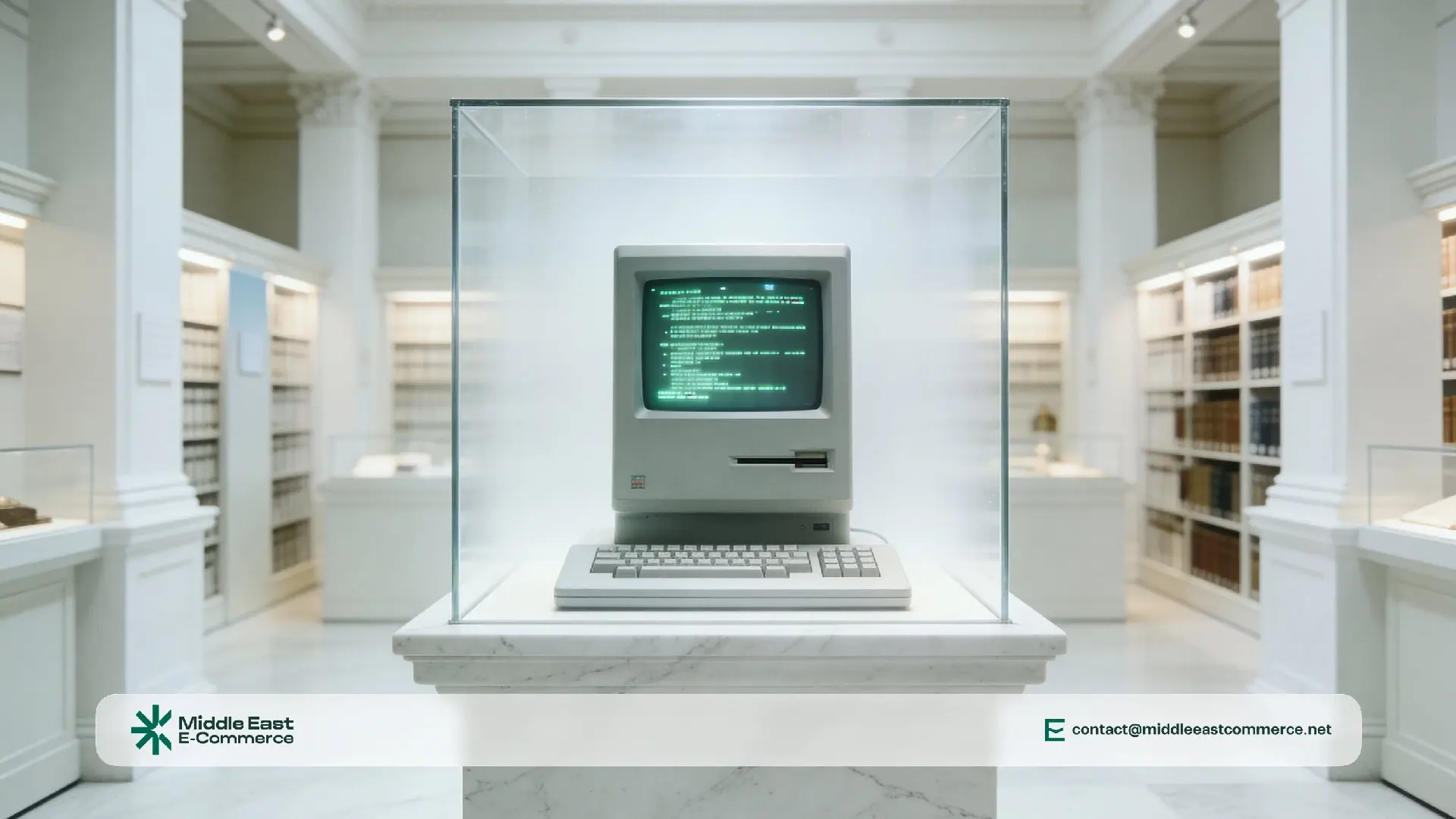
E-commerce began with Electronic Data Interchange (EDI) systems between businesses in the 1970s and 1980s, then underwent a major transformation with the spread of the internet in the 1990s and the emergence of the first online stores.
As payment systems evolved and smartphone use increased, online shopping became easier and more widespread. In recent years, AI and data analytics have further improved the user experience and increased the efficiency of online selling.
Global events, such as the COVID-19 pandemic, also directly impacted the growth of digital commerce, as relying on online solutions became a necessity for businesses and individuals. This article covers the key concepts of e-commerce, its stages of development, and how to benefit from modern tools to build a successful future in online selling.
The Origin of E-Commerce and Its Early Beginnings
When discussing the history of e-commerce, the story cannot be limited to the rise of modern online stores. Its roots go back much earlier than the widespread adoption of the internet.
E-commerce went through several technological shifts that shaped it into what it is today, starting from simple electronic exchange systems and evolving into AI-powered smart stores.
E-commerce emerged as a natural extension of technological progress in communications and data transfer. Companies began looking for faster and more efficient ways to conduct commercial transactions without relying entirely on traditional paper-based processes.
The Pre-Internet Era (Electronic Exchange and Communications)
Before the internet as we know it, early e-commerce concepts appeared through Electronic Data Interchange (EDI) in the 1960s and 1970s. This system allowed large companies to exchange invoices, purchase orders, and commercial documents electronically through closed networks.
Although these systems were not available to individuals, they became the foundation of e-commerce development stages by providing a practical model for conducting transactions without direct paper handling.
With the development of communication networks in the 1980s, banks and financial institutions began offering Electronic Funds Transfer (EFT) services, paving the way for the idea of electronic payments, which is now a core element of any digital business.
This stage established the technical rules that later enabled e-commerce to emerge, but it remained limited to large companies and government entities due to its high cost and complex infrastructure.
The Rise of the Internet in the 1990s and the Launch of Early Digital Stores
The 1990s marked the real turning point in e-commerce history with the commercial spread of the internet and the rise of web browsers. The internet enabled companies to present their products and services globally, fundamentally changing traditional commerce.
In the mid-1990s, early digital stores such as Amazon and eBay appeared, signaling the beginning of e-commerce in the form we know today. Individuals could browse products, compare options, and complete purchases online without leaving home.
During this stage, e-commerce concepts became clearer, including:
Online stores
Electronic payment gateways
Digital marketing
Digital supply chains
The development of security protocols such as SSL also helped build user trust, encouraging more consumers to try online shopping.
This stage is considered the main turning point in e-commerce development, as commerce moved from closed company-to-company systems to an open space used by millions worldwide, laying the groundwork for the digital revolution we live today.

Stages of E-Commerce Development Over Time
E-commerce did not stop evolving after the first digital store appeared in the 1990s.
It continued to grow rapidly with every new technological leap. The stages of e-commerce development can be divided into several key milestones that transformed it from simple product-display websites into a complete ecosystem driven by data and AI.
1- The Simple Websites and Limited Payment Stage
In the late 1990s and early 2000s, websites had simple designs and limited capabilities.
Most online stores were mainly used to display products, while payment was sometimes completed outside the website through bank transfers or cash on delivery.
During this period, e-commerce concepts were still forming, and users faced several challenges such as:
Slow internet speeds
Limited electronic payment methods
Security and data protection concerns
Despite these challenges, this stage was important for the early mass adoption of e-commerce. Small and medium businesses began creating their own websites instead of relying only on traditional stores. This era can be seen as a phase of testing and trust-building between consumers and digital technologies, a fundamental step in e-commerce development.
2- The Major Platforms and Electronic Payment Expansion Stage
By the mid-2000s, e-commerce history saw a major shift with the rise of large global platforms such as Amazon and Alibaba, the expansion of eBay, and the spread of electronic payment platforms such as PayPal.
Users became able to:
Create personal accounts
Save payment information securely
Track orders electronically
Rate products and sellers
The wider adoption of credit cards and the development of encryption and protection systems increased trust, leading to significant growth in global digital transactions.
During this stage, e-commerce concepts expanded to include new models such as:
Business to Business (B2B)
Business to Consumer (B2C)
Consumer to Consumer (C2C)
Digital marketing strategies, such as SEO and paid advertising, also became essential drivers of e-commerce growth. This stage represents global expansion and widespread adoption in the modern formation of e-commerce, as digital commerce shifted from an alternative option to a primary sales channel.
3- The Smartphone and Apps Stage
With the spread of smartphones after 2010, digital commerce entered a completely new stage. Users no longer needed a computer to buy. They could shop anytime, anywhere through mobile apps.
This leap reshaped the stages of e-commerce development and introduced concepts such as:
Mobile commerce (M-Commerce)
Instant offer notifications
Payments via e-wallets
One-click purchasing
Social media also supported e-commerce through Social Commerce, where brands could sell directly through platforms like Facebook and Instagram.
With advances in digital analytics and big data, companies started personalizing the user experience, paving the way for the next stage in e-commerce history: AI and advanced personalization.

E-Commerce During the COVID-19 Pandemic
The COVID-19 pandemic became a pivotal turning point in e-commerce history. E-commerce shifted from being a convenient option to an economic and social necessity. Lockdowns and social distancing created unprecedented constraints on traditional stores, pushing individuals and businesses to rely more on digital solutions.
This period can be considered one of the most important stages of e-commerce development, as the world experienced accelerated digital transformation and a major shift in consumer behavior.
The Acceleration of Global Digital Transformation
With the start of the pandemic in 2020, governments imposed partial and full lockdowns, disrupting traditional commerce. In contrast, e-commerce became the main way to meet daily needs such as:
Buying groceries
Ordering medicines and medical supplies
Shopping for clothing and devices
Accessing digital services
During this stage, e-commerce expanded rapidly in many developing countries as businesses and individuals who were not previously part of the digital economy entered online selling. Companies also invested in:
Developing their websites
Improving electronic payment systems
Enhancing fast delivery services
Supporting digital customer service
Consumer Behavior Changes and Businesses Moving Online
One of the most visible pandemic impacts was the clear change in consumer behavior. Consumers became more dependent on online purchasing and more focused on factors such as:
Delivery speed
Return policies
Payment security
Customer reviews
Trust in digital transactions increased, expanding customer bases even after lockdowns ended. In parallel, businesses realized that relying only on physical branches was no longer enough. Thousands of small and medium enterprises moved toward online stores or social selling, strengthening the role of digital commerce.
The pandemic’s role was not just a temporary replacement for closed stores. It was a launch point into a more mature, sustainable stage of e-commerce development.
The crisis proved that companies that adopted digital solutions early were more resilient, while non-digital organizations had to accelerate transformation to catch up.
Start now by creating your online store and building a global commerce presence with Middle East.

Core Concepts in Modern E-Commerce
With the ongoing development of e-commerce, digital commerce is no longer just a website that displays products. It has become an integrated system built on technology, data, and user experience.
E-commerce concepts have expanded to include diverse business models, advanced payment and shipping systems, precise digital marketing strategies, and a deeper focus on user experience.
Understanding these concepts helps you see the full picture of how e-commerce evolved into its current form.
1- Common Digital Business Models
E-commerce includes multiple business models based on the parties involved. The most common is B2C, widely used in online retail.
There is also B2B, used between companies and suppliers, and C2C, used in resale platforms. These models helped accelerate e-commerce development and expand online selling opportunities.
2- User Experience, Payments, Shipping, and Support Services
User experience is essential for digital commerce success, including ease of use, fast browsing, and simple checkout steps. Electronic payment systems provide multiple options such as cards and digital wallets.
Shipping services also play a critical role in delivering products quickly and safely. These elements are core parts of modern e-commerce concepts and its development stages.
3- A Simplified Concept Map for the E-Commerce Ecosystem
The e-commerce ecosystem relies on key components: the online store, product and inventory management, electronic payment systems, shipping and delivery services, and digital marketing tools to attract customers. This integration reflects how e-commerce concepts developed into connected systems working together efficiently.
The Role of AI in the Future of E-Commerce
AI in e-commerce has become one of the most important technologies changing how online selling and marketing work.
It helps analyze data, improve user experience, and increase operational efficiency. It also enables personalized shopping experiences for each customer, boosting sales and satisfaction.
As technology continues to develop, AI will remain a core driver of the future of e-commerce and online selling.
1- Smart Recommendations and Customer Behavior Analysis
Smart recommendations display products tailored to each customer based on interests and browsing behavior. AI analyzes behaviors such as searches, purchases, and viewed products.
Based on these data points, stores can deliver accurate suggestions that increase purchase likelihood. Customer behavior analysis is one of the key factors supporting e-commerce growth and improving the shopping experience.
2- Automation and Smart Customer Service
Automation plays a major role in improving speed and efficiency. AI systems can respond to customer inquiries through live chat and provide support 24/7. Smart customer service helps solve problems faster and improves user experience.
These technologies reduce costs and improve service quality, supporting the future of online selling.
How AI Will Shape the Future of Online Selling
AI will strongly influence how digital stores are managed. It helps optimize pricing, manage inventory, and forecast demand.
It also enables businesses to understand customers better and make more accurate decisions. As these technologies evolve, AI will be central to the future of e-commerce and will make online selling more efficient and intelligent.
You can now access stronger analytics and advanced AI to improve your business and commercial decisions through the Middle East platform.
From a Store Platform to a Unified Ecosystem: Why the Market Is Moving Toward Comprehensive Solutions Like Middle East
Relying on separate tools is no longer enough to manage online selling operations. That is why the market is shifting toward comprehensive solutions that bring all e-commerce elements into one system.
Middle East is an example of this direction, providing an integrated environment connecting stores, suppliers, and customers.
This model improves efficiency, reduces complexity, supports the future of e-commerce, and makes operations faster and more organized.
1- An Integrated Experience Instead of Scattered Tools and Services
Traditional setups rely on multiple tools for product management, payments, and shipping, which creates fragmentation and management difficulty.
A unified ecosystem within Middle East brings these elements together in one place, simplifying operations, improving user experience, reducing errors, and saving time and effort.
2- A Connected Buying and Selling Flow Within One System
Middle East offers an integrated flow from product listing to deal completion. You can manage products, track orders, and complete payments within the same system.
This integration improves e-commerce efficiency, accelerates sales, and gives businesses clearer visibility across the online selling lifecycle.
3- Direct Communication That Speeds Up Closing Deals
Direct communication between parties inside the platform speeds up decision-making.
Merchants and buyers can interact easily without external tools. This reduces the time needed to finalize deals, strengthens trust, and improves selling outcomes.
4- Gradual Scalability From Local to Global
A unified ecosystem allows businesses to start locally and expand gradually, supported by infrastructure designed for growth and customer expansion. It also makes entering new markets easier.
This scalability is a key part of the future of online selling, as companies increasingly rely on integrated platforms that support continuous growth.
If you are looking for an integrated solution to support your digital commerce growth, contact us now to learn how the platform can help you develop your business and benefit from future e-commerce opportunities.
How Can You Benefit From E-Commerce Development Today?
Anyone can start an online project or work in this field. Understanding the stages of e-commerce development helps you leverage modern tools and achieve real growth in the future of e-commerce.
Digital Work and Project Opportunities
E-commerce development creates diverse opportunities such as launching an online store, working in digital marketing, managing stores, or working in shipping and technical support.
Individuals can also sell products or services online without needing a physical location. This evolution has created new digital projects that support the future of online selling and open multiple income paths.
Essential Skills Needed to Succeed
Success in digital commerce requires skills such as digital marketing, online store management, and customer behavior analysis. Skills in using e-commerce tools and understanding user experience also help improve performance and increase sales.
As e-commerce continues to develop, these skills have become essential for anyone who wants to benefit from future opportunities.
FAQs About the Development of E-Commerce
1- How long does it take beginners to learn e-commerce?
Learning e-commerce depends on the goal and level of commitment, but beginners can understand the basics within one to three months.
These basics include learning e-commerce concepts, how to create an online store, and how to use digital marketing tools. With continuous practice, skills can improve further and support future e-commerce opportunities.
2- How can you start e-commerce step by step?
You can start e-commerce through clear steps. First, choose the right product or service.
Second, define the target audience and study the market.
Third, create an online store through the Middle East platform.
After that, add products and define payment and shipping methods.
Finally, use digital marketing to attract customers. These steps help build a successful project and benefit from the stages of e-commerce development.
Conversation
Comments
Be the first to comment.
Leave a comment