
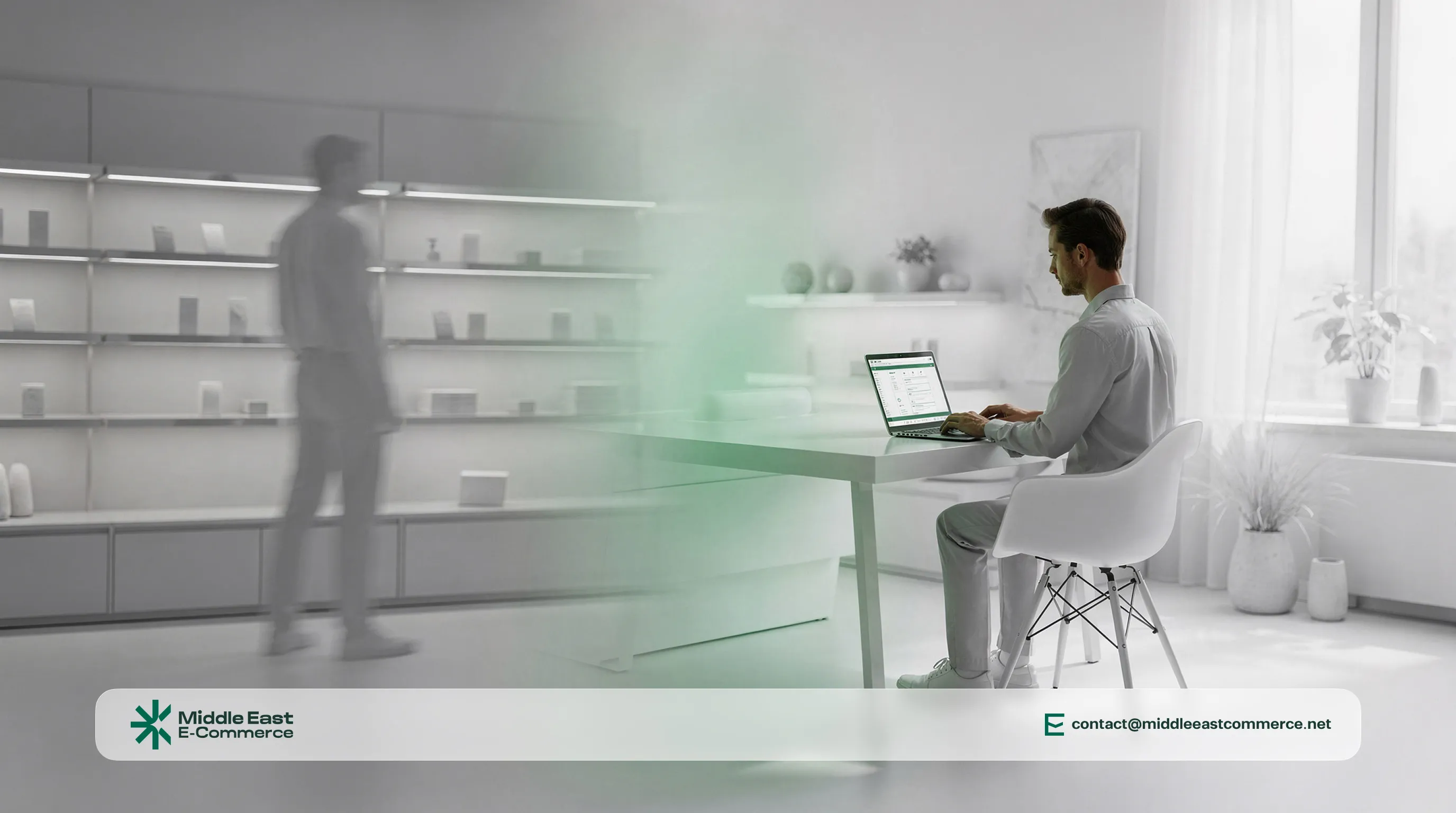
Are you struggling to decide whether to stick with traditional commerce or move your business online? You’re not alone. Choosing the wrong model can limit your growth, increase costs, and make it harder to reach customers effectively.
The good news is that by understanding the difference e commerce and e business, you can make smarter decisions that save money, expand your reach, and streamline operations.
This guide shows you how e-commerce can reduce overhead, improve customer experience, and unlock new opportunities, while also explaining when traditional methods or hybrid models might work better for your business. By the end, you’ll know exactly which approach fits your goals and how to take action in 2026 to grow efficiently.
What Does E-commerce Mean?
E-commerce, short for electronic commerce, refers to buying and selling goods or services over the internet. It allows businesses and consumers to connect without physical stores, making transactions faster and more convenient.
Understanding the difference e commerce and e business is important because while e-commerce focuses on online transactions, e-business covers broader digital activities, including online marketing, supply chain management, and customer service.
What traditional commerce means in simple terms?
Traditional commerce involves face-to-face transactions where customers visit a physical store to buy products or services. It relies on direct interaction, in-person payments, and local customer reach.
Unlike online platforms, traditional commerce emphasizes the physical experience and immediate product availability, highlighting one of the key aspects of the difference between e-commerce and e-business in today’s market.
What e-commerce means in simple terms?
In simple terms, e-commerce is any commercial activity conducted through digital platforms. From shopping websites to mobile apps, it allows businesses to sell products and services online.
E-commerce enables global reach, lower operational costs, and 24/7 availability, which sets it apart in the larger context of digital business vs e-commerce, where digital business also includes activities like online advertising and data analytics.
E-commerce vs E-business vs Digital Business (Stop the Confusion)
Many people use the terms e-commerce, e-business, and digital business interchangeably, but they are not the same. E-commerce specifically refers to online buying and selling, while e-business covers all business processes conducted online, such as inventory management, customer support, and digital marketing.
Digital business goes even further, transforming the entire business model using technology, analytics, and digital platforms. Knowing the similarities between e-commerce and e-business helps reduce confusion and allows businesses to choose the right approach for their operations.
The difference between e-commerce and e-business explained clearly
The main distinction lies in scope. E-commerce is transactional it focuses on selling products or services online. E-business, however, includes e-commerce as well as other online business functions like supply chain management, HR systems, and customer engagement tools.
By understanding the difference between e-commerce and e-business, companies can plan more effective digital strategies and ensure all parts of their business benefit from technology.
Digital business vs e-commerce and where each one fits
Digital business is broader than e-commerce. While e-commerce handles online sales, digital business integrates digital tools into every aspect of an organization, including marketing, operations, and customer experience.
Companies that focus only on e-commerce may miss out on strategic opportunities that digital business provides. Comparing digital business vs e-commerce clarifies which approach suits different business goals, whether it’s expanding market reach or transforming internal operations.

Comparison Table: E-commerce vs E-business vs Digital Business
To make the differences clear, here’s a structured comparison of the three concepts:
Term | What it includes | Typical examples | Best used when |
E-commerce | Online buying and selling transactions | Online stores, checkout systems, payment gateways | Your focus is selling online; the main goal is transactions |
E-business | E-commerce plus internal business operations | CRM systems, ERP, procurement platforms, customer support tools | You run business processes digitally end-to-end; efficiency matters |
Digital business | Business model built around digital products and channels | SaaS platforms, subscription services, online marketplaces | The core value of your business is digital-first; technology drives growth |
E-Commerce vs Traditional Commerce: Quick Comparison
Understanding the practical differences between e-commerce and traditional commerce helps businesses and consumers make better choices. While traditional commerce relies on physical stores and in-person transactions, e-commerce leverages digital platforms to reach broader audiences. This section summarizes the main differences in a simple and clear way.
Summary Table: Costs, Reach, and Experience
Comparison area | Traditional commerce | E-commerce |
Operating hours | Limited by store hours | 24/7 availability |
Customer reach | Mostly local | Local + global |
Cost structure | Higher fixed costs | Lower fixed costs, scalable ops |
Product inspection | In-person inspection | Images, descriptions, reviews |
Fulfillment | In-store pickup / immediate | Shipping and delivery workflow |
Data & analytics | Limited | Strong tracking and measurement |
Cost Comparison: Why E-commerce Often Saves Businesses Money?
One of the biggest advantages of e-commerce over traditional commerce is cost efficiency. By understanding how costs differ between the two models, businesses can make smarter financial decisions and optimize their operations.
Fixed costs vs variable costs in both models
Traditional commerce usually requires high fixed costs, such as rent for physical stores, utilities, and in-store staff salaries. E-commerce, on the other hand, reduces these fixed costs significantly because it relies on digital storefronts and scalable online infrastructure.
This highlights a key aspect of the difference e commerce and e business, where e-businesses use technology to automate processes and cut overhead.
Marketing and acquisition costs and what changes online
Marketing in traditional commerce often depends on local advertising, flyers, and physical promotions. E-commerce allows for targeted digital marketing, pay-per-click campaigns, and social media outreach, which can be more cost-effective and measurable. The ability to track performance in real time also makes customer acquisition more precise and efficient.
Inventory, staffing, and operational overhead differences
Inventory management in e-commerce can be centralized in warehouses or distributed using drop-shipping, reducing the need for multiple physical stores.
Staffing requirements are often lower since many processes, such as order processing and customer service, can be automated or managed online. Operational overhead including utilities, maintenance, and in-store logistics is therefore significantly lower in e-commerce compared to traditional commerce.
Cost Table: Typical Cost Drivers
To better understand why e-commerce often saves businesses money, here’s a breakdown of typical cost drivers for traditional commerce versus e-commerce
Cost driver | Traditional commerce | E-commerce |
Rent/location | High | Low or none |
Staffing | Front-store heavy | Can be leaner with automation |
Inventory | Often larger for display | Flexible by model (stock, dropship, pre-order) |
Marketing | Local-heavy | Digital and measurable |
Operations | In-person workflows | Systems-based workflows |
How E-commerce Affects Businesses?
E-commerce has transformed the way businesses operate, creating both opportunities and new challenges. By understanding these impacts, companies can plan strategies that take full advantage of digital commerce.
Faster expansion without opening new branches
One of the biggest operational benefits of e-commerce is the ability to expand quickly without investing in physical stores. Businesses can reach new cities or even global markets through online platforms, reducing upfront costs and time.
This is a clear example of the difference e commerce and e business, where digital processes allow growth without traditional infrastructure.
Higher competition and customer acquisition pressure
With online accessibility comes increased competition. Businesses face pressure to attract and retain customers through digital marketing, competitive pricing, and high-quality online experiences. Unlike local physical stores, e-commerce exposes businesses to a global marketplace where differentiation is key.
Greater dependency on logistics, payments, and service quality
E-commerce operations rely heavily on reliable logistics, secure payment systems, and responsive customer service. Delays in shipping or technical issues with payment gateways can directly impact customer satisfaction. Efficient supply chain management, automated systems, and strong service support are essential to maintain trust and competitiveness in the online market.
Customer Experience Comparison: How Shopping Changes Online?
E-commerce has reshaped the shopping experience, affecting how buyers discover, evaluate, and purchase products. Understanding these changes helps businesses optimize their digital strategies and improve customer satisfaction.
The buyer journey from search to checkout to delivery
In e-commerce, the buyer journey starts with online search and product discovery, continues through an easy-to-navigate checkout process, and ends with delivery to the customer’s doorstep.
This seamless flow contrasts with traditional commerce, where customers must visit a store physically. Recognizing these differences highlights the similarities between e-commerce and e-business, as both aim to improve user experience and operational efficiency.
Reviews, comparison, and trust signals in online decisions
Online shopping relies heavily on reviews, ratings, and product comparisons to guide purchasing decisions. Trust signals such as verified reviews, security badges, and transparent policies play a key role in influencing buyers elements largely absent in traditional commerce.
Returns and after-sales support as a loyalty driver
E-commerce businesses that provide easy returns and responsive after-sales support can increase customer loyalty. Unlike in-store purchases, online buyers expect flexible solutions for returns and exchanges, making customer service a critical part of the digital shopping experience.
Experience Table: Before, During, After Purchase
Stage | Traditional commerce | E-commerce |
Before purchase | Limited product comparisons | Search, compare, read reviews |
During purchase | In-person assistance | UX-focused checkout, multiple payment options |
After purchase | Often instant product access | Delivery, tracking, responsive support |
Returns | Usually local and faster | Policy-based, shipping-dependent |
Similarities Between E-commerce and Traditional Commerce
Even though e-commerce and traditional commerce operate in very different environments, they share several fundamental business principles that are critical for success.
Both require trust, pricing strategy, and customer service
Both models depend heavily on building trust with customers. Competitive pricing, transparent policies, and responsive customer service remain key factors in attracting and retaining buyers, whether they shop online or in a physical store.
This demonstrates one of the similarities between e-commerce and e-business, as both require strong customer relationships and reliability.
Both rely on supply chain discipline and brand reputation
Effective supply chain management is essential in both traditional and online commerce. Timely delivery, quality control, and inventory management ensure customer satisfaction. Additionally, brand reputation built through consistent experiences, marketing, and customer interactions remains a crucial asset across both channels.
Types of E-commerce (The 4 Core Types)
E-commerce is not a one-size-fits-all model. Understanding its different types helps businesses and consumers navigate the digital marketplace effectively.
Business-to-Consumer (B2C) with a simple example
B2C e-commerce involves businesses selling directly to individual consumers. Online retail stores like Amazon or Shopify-based shops exemplify this model, where products are purchased for personal use. This type highlights the difference e commerce and e business, as B2C focuses on online sales, while e-business encompasses broader digital operations.
Business-to-Business (B2B) with a simple example
B2B e-commerce occurs when one business sells products or services to another business. Examples include Alibaba or specialized wholesale platforms. These transactions often involve larger orders, recurring contracts, and integrated digital tools for procurement, showing how the difference between e-commerce and e-business plays out in professional settings.
Consumer-to-Consumer (C2C) with a simple example
C2C e-commerce allows consumers to sell directly to other consumers, typically through platforms like eBay, OLX, or Facebook Marketplace. This model empowers individuals to monetize goods without formal business structures, demonstrating the flexibility of digital business vs e-commerce, where digital tools facilitate peer-to-peer transactions.
Consumer-to-Business (C2B) with a simple example
In C2B e-commerce, consumers offer products or services to businesses. Examples include freelance platforms like Upwork or marketplaces where creators sell their digital content to companies. C2B emphasizes the reverse flow of value and highlights how similarities between e-commerce and e-business exist in leveraging technology for transactions and workflow management.

When a Hybrid Model Makes More Sense?
For many businesses, choosing between e-commerce and traditional commerce isn’t an either-or decision. A hybrid model can combine the strengths of both, creating a flexible and competitive strategy.
When physical presence is a competitive advantage?
Some businesses benefit from in-person experiences that enhance customer trust or allow hands-on product inspection. Luxury retailers, boutique stores, and certain service providers often gain a competitive edge by maintaining physical locations.
Understanding this factor helps highlight the difference e commerce and e business, as hybrid strategies balance digital efficiency with tangible customer interaction.
When online channels unlock scale and repeat sales?
E-commerce provides the ability to reach wider audiences, scale quickly, and encourage repeat purchases through subscriptions, email marketing, and loyalty programs. Online channels complement physical stores by capturing additional market share that might otherwise be inaccessible.
How to combine both without operational chaos?
Successful hybrid models integrate physical and digital operations seamlessly. This includes synchronized inventory systems, unified customer service, and consistent branding across channels. Using automated workflows, analytics, and clear communication helps avoid operational chaos and ensures both channels support each other efficiently.
Why Choose Middle East for a Smooth Move from Traditional to E-commerce?
Shifting from traditional commerce to e-commerce requires careful planning and the right infrastructure. The Middle East offers unique advantages for businesses looking to make this transition efficiently.
1- Build an online store with a structured setup from day one
Businesses can launch fully functional online stores quickly, with professional setups that include product catalogs, payment gateways, and secure checkout systems. A structured approach from the beginning reduces errors and ensures smooth operations, highlighting the difference e commerce and e business for growing companies.
2- Reach customers beyond your location through a unified experience
E-commerce platforms in the region enable businesses to target local and international audiences simultaneously. A consistent user experience across all channels helps attract new customers while maintaining loyalty from existing ones.
3- Real-time translation for cross-border communication and fewer misunderstandings
Tools for real-time translation and multilingual support make cross-border transactions easier, reducing language barriers and improving customer satisfaction. This capability reflects the similarities between e-commerce and e-business, as both leverage technology to streamline communication.
4- Tracking and performance tools to improve operations and scaling decisions
Robust analytics and performance tracking tools allow businesses to monitor sales, customer behavior, and marketing ROI in real time. These insights help optimize operations, manage resources, and make data-driven scaling decisions, demonstrating the advantages of digital business vs e-commerce in a fast-growing market.

FAQs About E-commerce vs Traditional Commerce
1- What does ecommerce mean?
E-commerce refers to buying and selling products or services online. Unlike traditional commerce, which relies on physical stores, e-commerce allows businesses to reach wider audiences, operate 24/7, and streamline transactions. Understanding the difference e commerce and e business helps clarify that e-commerce focuses on online sales, while e-business covers broader digital operations.
2- Why does e-commerce save businesses money?
E-commerce reduces costs in areas like rent, staffing, inventory, and operations. Digital marketing is often more measurable and efficient than local promotions, and automated systems minimize overhead. These savings illustrate the difference e commerce and e business, as online operations allow businesses to optimize workflows and scale efficiently.
3- How does e-commerce affect businesses?
E-commerce enables faster expansion without opening new branches, increases competition, and creates a reliance on logistics, payments, and service quality. Businesses must adapt to digital processes while maintaining customer trust, showing the similarities between e-commerce and e-business in how technology drives operational efficiency.
4- What are the 4 types of e-commerce?
The four core types of e-commerce are:
B2C (Business-to-Consumer): Businesses selling to individuals, like an online retail store.
B2B (Business-to-Business): Companies selling to other businesses, such as wholesale platforms.
C2C (Consumer-to-Consumer): Individuals selling to other individuals via platforms like eBay.
C2B (Consumer-to-Business): Consumers offering products or services to businesses, like freelance platforms.
Conversation
Comments
Be the first to comment.
Leave a comment