

Not every online business is built the same, and choosing the wrong approach can cost you time, money, and customers. Understanding the different types of e-commerce can help you sell smarter, connect with the right audience, and grow your business faster. Each core e-commerce type has its own audience, sales process, and opportunities, and knowing them puts you in control of your strategy.
In this guide, you’ll explore the seven main forms of e-commerce with clear examples, see how they differ, and find out which type fits your products and your customers best. Whether you’re selling to individuals, businesses, or even governments, this guide will help you pick the right e-commerce model and get started with confidence.
What Are E-commerce Types and Why Does Classification Matter?
When you start learning about online selling, you’ll quickly notice that there are several types of e-commerce.
Each type describes who is selling and who is buying.
Understanding this idea helps you see how online markets actually work.
For example:
A company selling products directly to customers.
A business selling goods to another business.
Individuals selling items to other individuals online.
When you know these categories, it becomes easier to understand the Electronic commerce space and where your business idea fits. It also helps you plan your strategy before launching an online store.
The Difference Between a Type, a Model, and a Format in E-commerce
Many beginners confuse these terms, but they describe different parts of online selling , in addition, e-commerce models usually explain the relationship between the buyer and the seller.
Here’s a simple way to think about it:
Type: the category of transaction (who sells to whom).
Model: how the business structure works.
Format: the way the platform is organized.
For example:
A brand selling directly from its website.
A marketplace where multiple sellers list products.
A platform focused on services instead of physical goods.
How to choose the right type based on your product, audience, and sales channel
Choosing between the core e-commerce types becomes easier when you focus on three main things:
Your product
Your audience
Your sales channel
Start by asking yourself a few questions:
Is your product meant for everyday consumers?
Are you selling supplies that businesses need?
Will you sell through your own website or a marketplace?
For example:
If you sell clothing or accessories, your audience is usually individual shoppers.
If you sell office equipment in bulk, your buyers may be companies.
If you sell handmade items, you might target customers through online marketplaces.
When you match your product with the right audience and channel, choosing the right e-commerce structure becomes much clearer.
The Four Core Types of E-commerce
When people talk about online selling, they usually refer to four core e-commerce types.
These categories are based on who is selling and who is buying.
The four main categories are:
Business selling to consumers.
Business selling to other businesses.
Consumers selling to other consumers.
Consumers offering products or services to businesses.
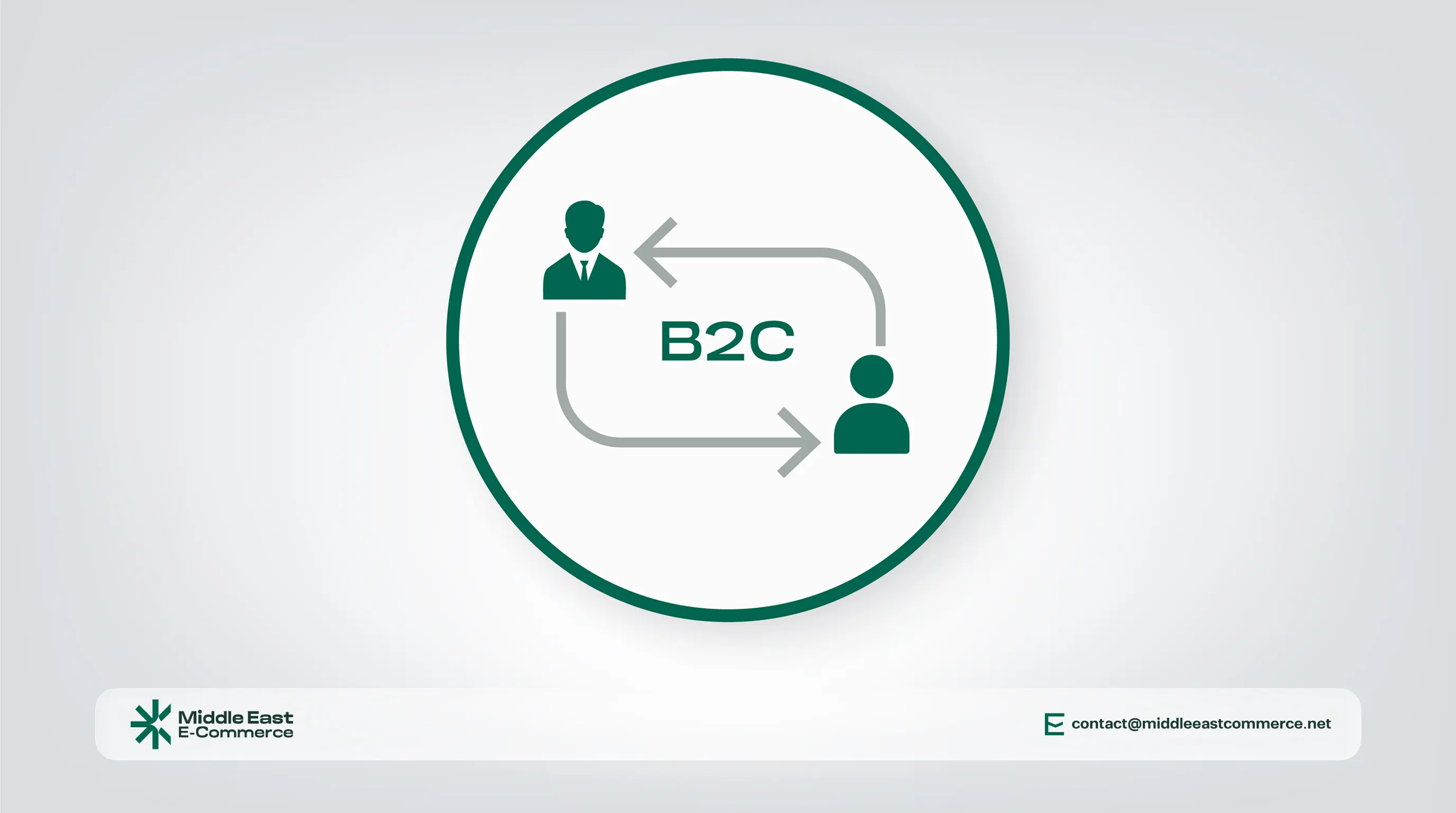
Business-to-Consumer (B2C) e-commerce with a clear example
Business-to-Consumer, often called B2C, is the most familiar structure in online shopping. In this type, a company sells products or services directly to individual customers through a website, an app, or an online marketplace.
It’s one of the most common forms of e-commerce because it reflects the way most people shop online today. For example, when a clothing brand sells jackets or shoes through its website and delivers them to customers at home, that’s a clear e-commerce example of B2C.
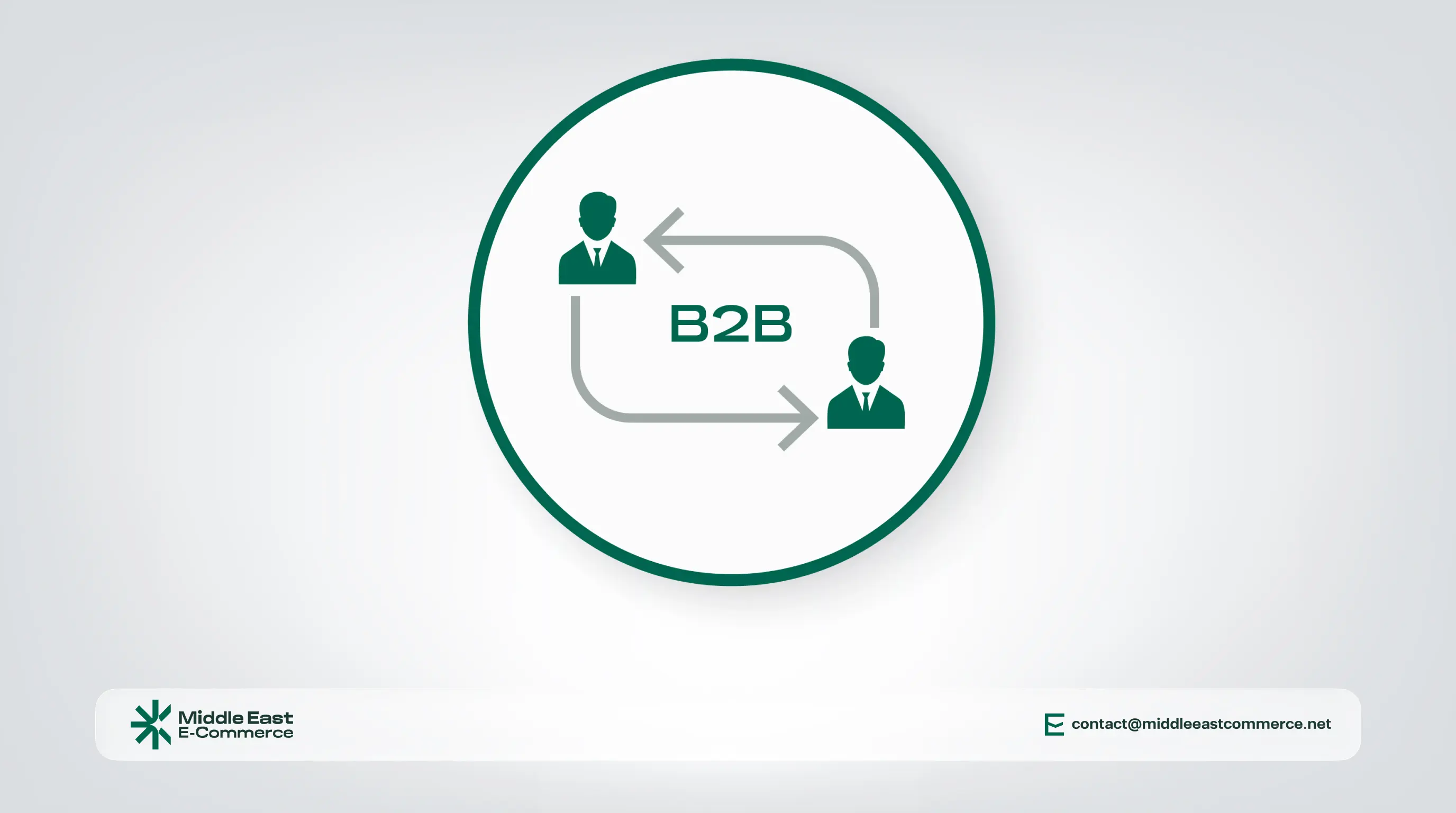
Business-to-Business (B2B) e-commerce with a clear example
Business-to-Business, or B2B, focuses on transactions between companies rather than individual shoppers. In this case, one business provides products or services that another business needs to operate. Many wholesale suppliers and manufacturers work within this structure.
These relationships are part of the broader e-commerce models used in supply chains. For instance, a company that sells packaging materials in bulk to an online cosmetics brand is a typical types of e-commerce situation where both sides of the transaction are businesses.
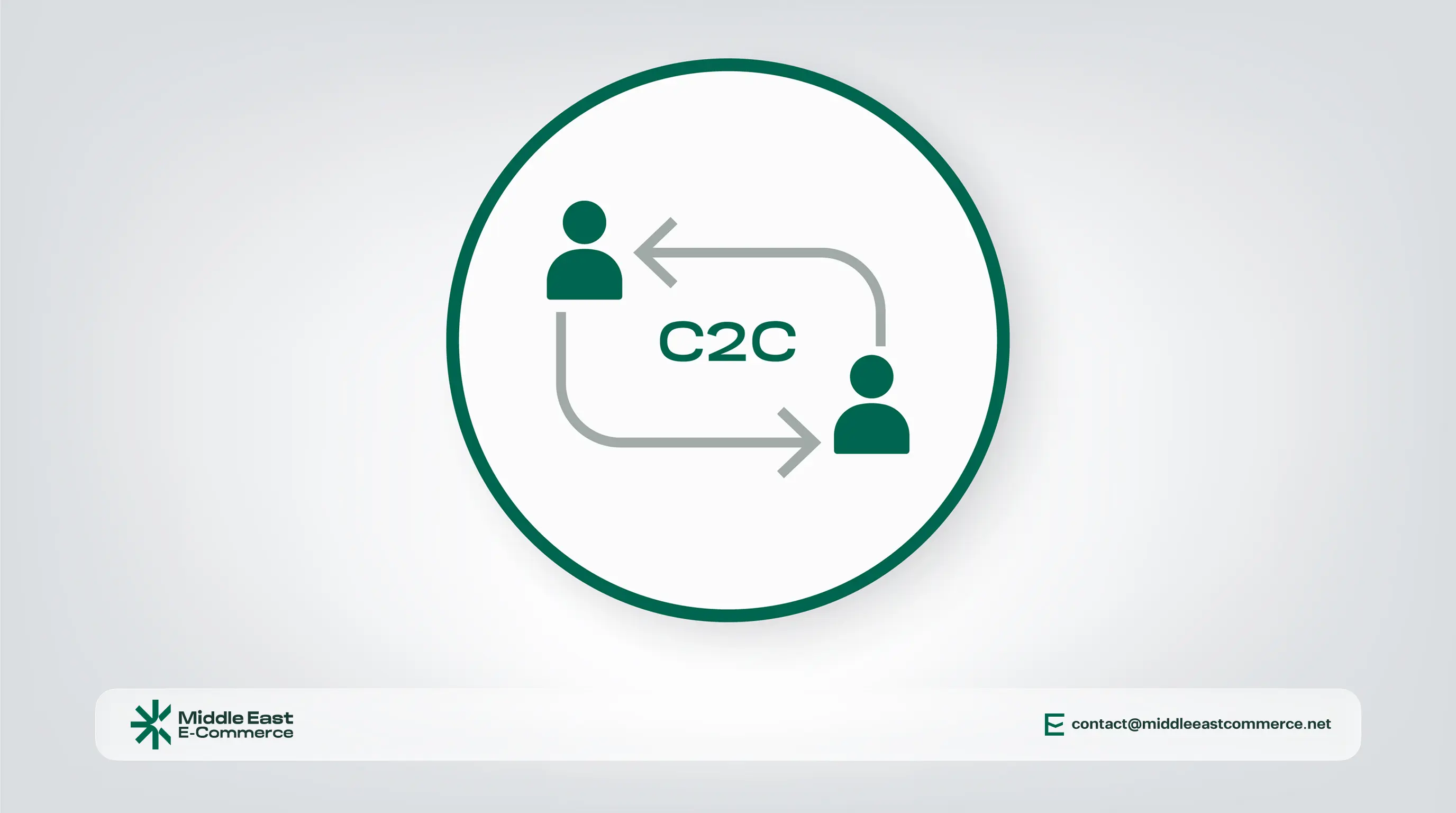
Consumer-to-Consumer (C2C) e-commerce with a clear example
Consumer-to-Consumer e-commerce happens when individuals sell products directly to other individuals through online platforms. This is a very accessible option because people often start by selling items they already own.
It’s one of the simpler forms of e-commerce because it doesn’t always require a full business setup. A person selling a used phone, second-hand clothes, or handmade crafts online is a straightforward e-commerce example of this type of transaction.
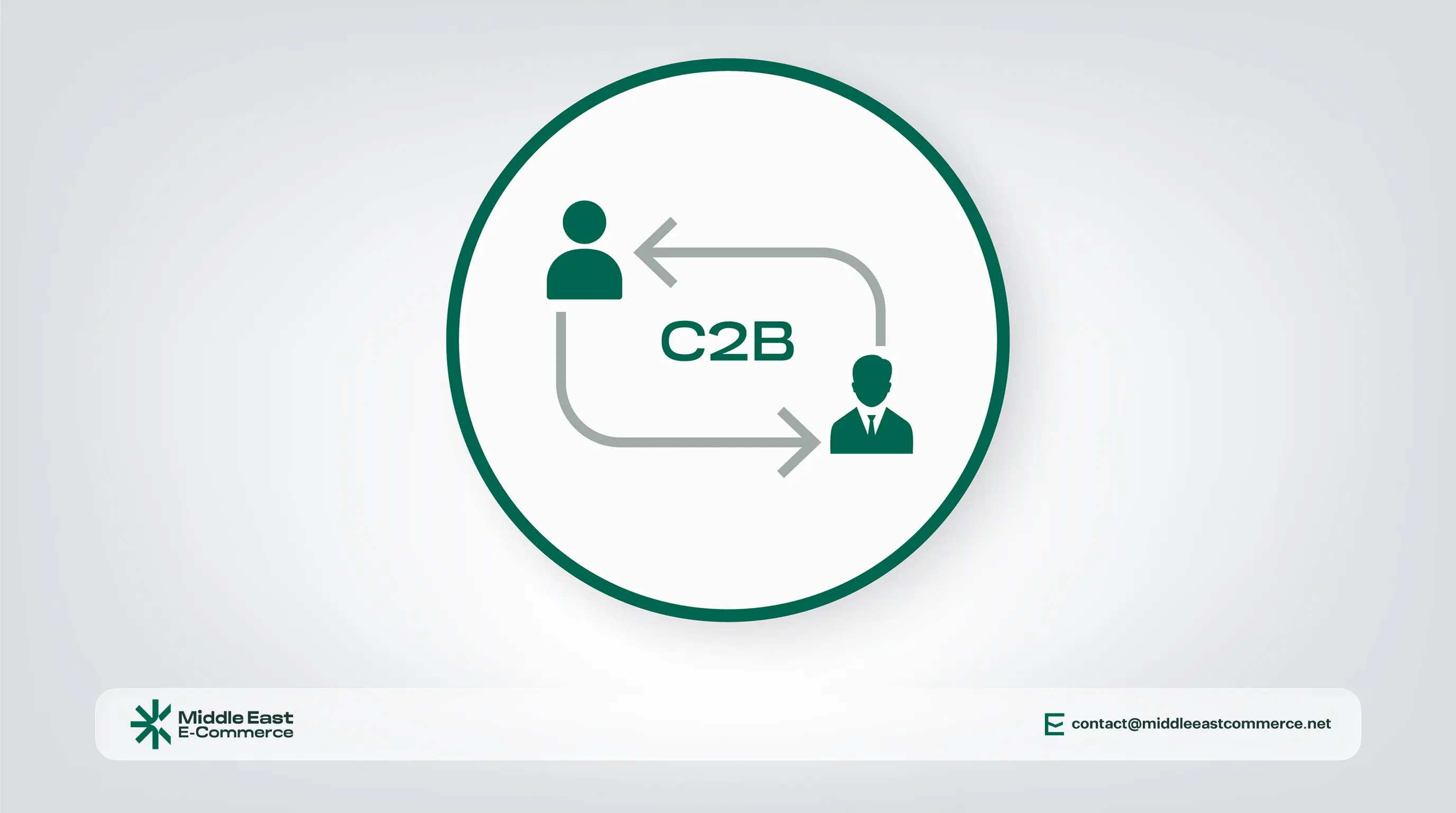
Consumer-to-Business (C2B) e-commerce with a clear example
Consumer-to-Business, known as C2B, works in the opposite direction of traditional selling. Instead of companies offering products to individuals, people provide value to businesses. This can include creative work, digital services, or other contributions that companies need.
Within the broader e-commerce classification, this type reflects the growing role of freelancers and independent creators in the digital economy. For example, a freelance designer creating a logo for a startup through an online platform represents a clear types of e-commerce interaction where an individual sells a service to a business.
The Full Seven E-commerce Types with Practical Examples
When you look at the digital marketplace more closely, you’ll find that the industry is often explained through seven main types of e-commerce. The first four are the most common: B2C, B2B, C2C, and C2B.
However, three additional categories involve government interactions with businesses and citizens. Together, these categories create a broader e-commerce classification that helps explain how digital transactions happen between companies, individuals, and public institutions.
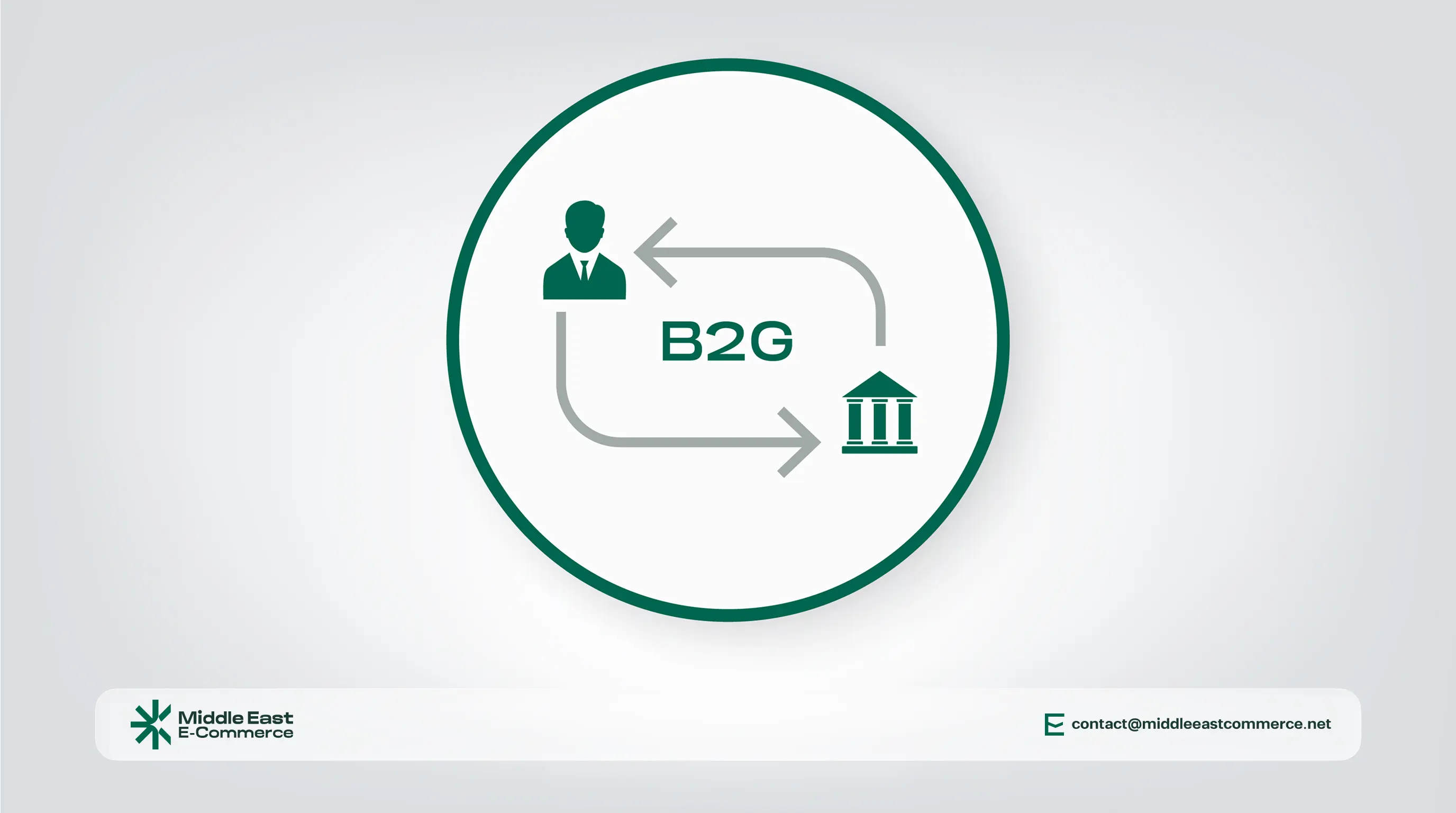
Business-to-Government (B2G) e-commerce with an example
Business-to-Government, or B2G, happens when companies provide products or services to government institutions through digital platforms. This type is common in sectors such as technology, infrastructure, and consulting.
Many governments publish online tenders where companies can submit proposals and bids. Within the wider e-commerce models, this structure focuses on how businesses supply solutions to public organizations.
For example, a software company developing an online tax management system for a government agency is a practical e-commerce example of B2G.
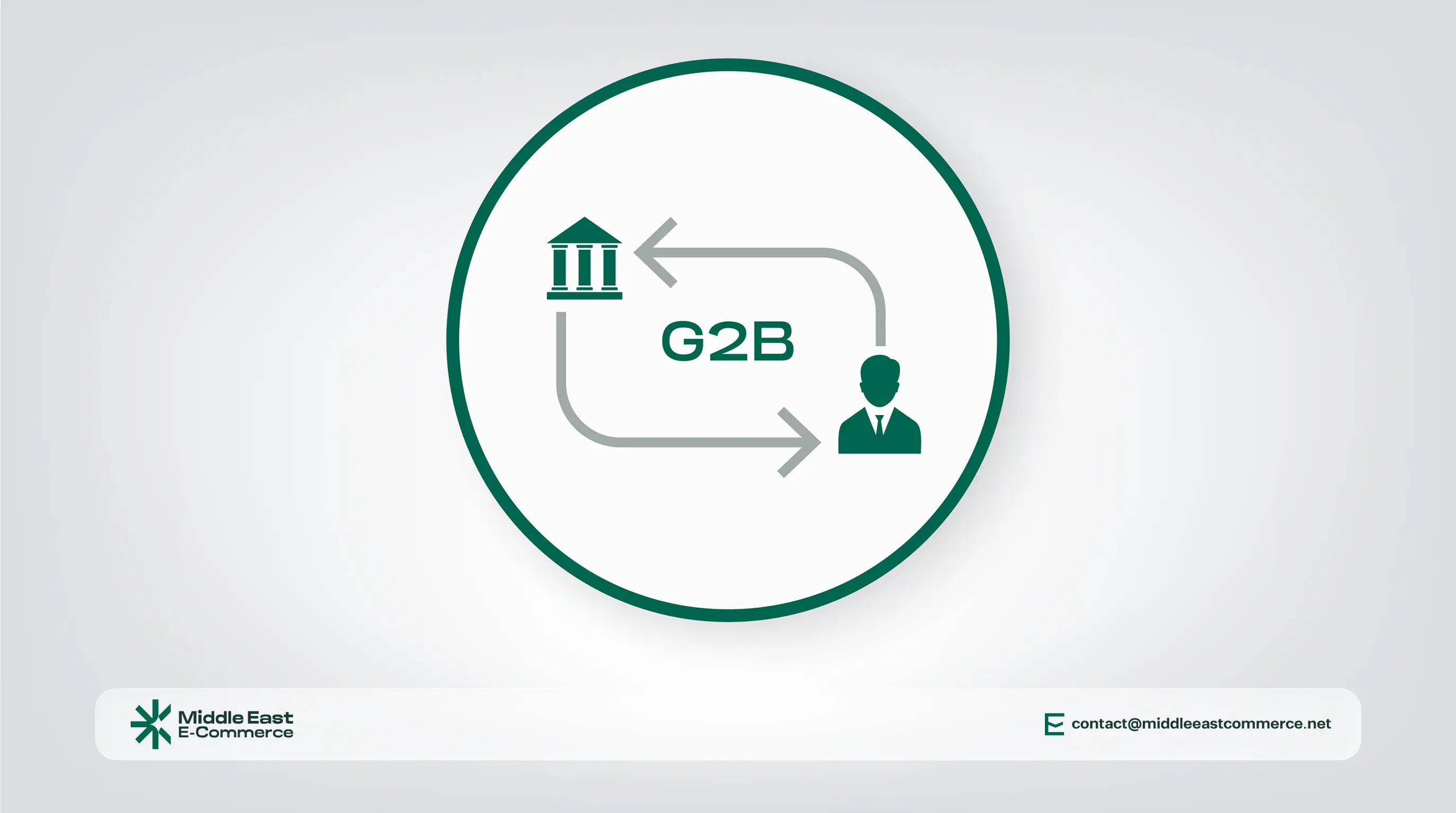
Government-to-Business (G2B) e-commerce with an example
Government-to-Business, known as G2B, describes situations where government institutions provide digital services to companies. These services often include licenses, permits, tax systems, and official documents that businesses need to operate legally. As digital services expand, this interaction has become a visible part of modern forms of e-commerce.
For instance, when a company registers its business online or submits tax documents through a government portal, it represents a real types of e-commerce interaction between a public authority and a private business.
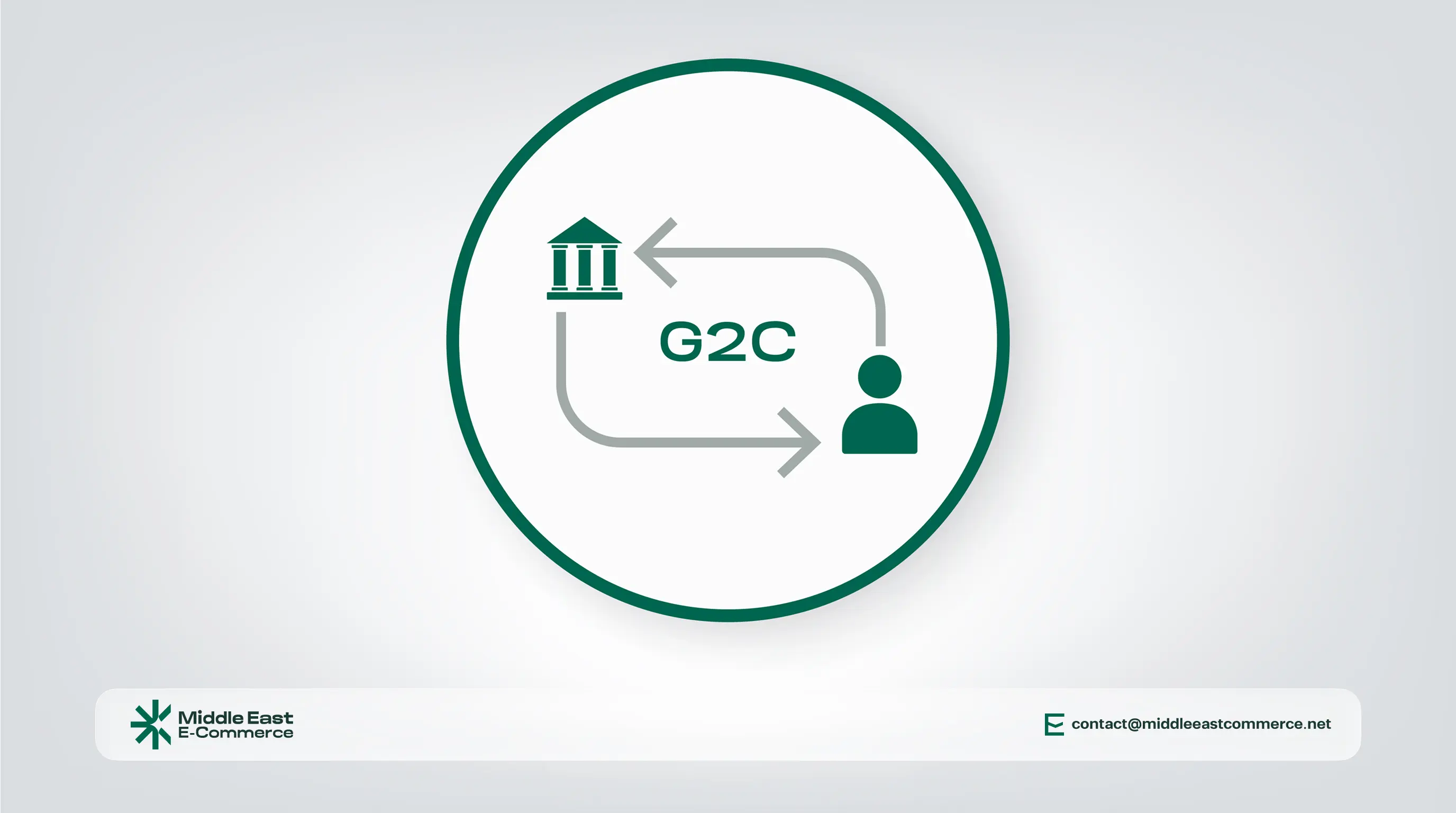
Government-to-Consumer (G2C) e-commerce with an example
Government-to-Consumer, or G2C, focuses on online services that governments provide directly to citizens. Many countries now offer digital portals where people can complete tasks without visiting an office.
These services include paying utility bills, renewing identification documents, or accessing public information. This category is part of the broader core e-commerce types because it involves online transactions and digital service delivery. A simple e-commerce example is when a citizen renews a driver’s license or pays traffic fines through an official government website.
Comparing E-commerce Types and When to Use Each One
Once you know the seven main types of e-commerce, the next step is figuring out which one fits your business idea. Each type has its strengths and is best suited for certain products, audiences, or sales processes. Comparing them helps you choose the right approach instead of trying to force your business into the wrong model. This is one of the key ways e-commerce examples can guide your decisions.
Comparison by target customer: individuals, businesses, or government entities
A simple way to compare e-commerce types is by looking at who your customers are.
Individuals: If your target audience is everyday shoppers, B2C or C2C models usually make the most sense.
Businesses: If you sell supplies, software, or services to other companies, B2B or C2B fits better.
Government entities: If you’re providing services or products for public institutions, B2G, G2B, or G2C is the natural choice.
Comparison by sales cycle: fast vs long decision cycles
Understanding your sales cycle helps you prepare your marketing, pricing, and follow-up strategies for each core e-commerce type.
Fast sales: B2C and C2C transactions are usually quick because individual customers make spontaneous buying decisions.
Long sales: B2B and B2G often involve longer processes because companies and governments need approvals, negotiations, or tender evaluations.
Comparison by operations: payments, shipping, and customer support
The type of e-commerce you choose also affects how you handle operations and considering these operational differences ensures your processes match the demands of each forms of e-commerce, so you can provide a smooth experience for your buyers.
Payments: B2C usually relies on credit cards, wallets, or online banking, while B2B may use invoicing or bulk payments.
Shipping: Individual shipments for B2C, bulk logistics for B2B, or digital delivery for C2B and G2C.
Customer Support: B2C and C2C often require fast, responsive support for many small customers, whereas B2B and B2G focus on account management and long-term relationships.
Which E-commerce Type Is Most Profitable?
When you start thinking about e-commerce profitability, it’s easy to wonder which type makes the most money. The truth is, there isn’t a one-size-fits-all answer. Profit depends on many factors, including your product, audience, costs, and how efficiently you run your operations. Understanding these factors is key before you pick a model just because it “sounds profitable.”
What actually determines profitability for each type
Profitability in e-commerce models depends on several things:
Customer volume: B2C and C2C often rely on large numbers of small transactions.
Order size: B2B or B2G transactions usually involve fewer but larger orders.
Costs: Production, shipping, platform fees, and customer support can vary widely.
Repeat business: Subscription models or services that encourage repeat purchases can increase profits across almost any type.
Practical examples of profitable setups across different types
Looking at real e-commerce examples makes it easier to see which setups work.
B2C: Online fashion brands selling directly to consumers with strong social media marketing.
B2B: Wholesale suppliers providing raw materials to multiple businesses at scale.
C2C: Online marketplaces where individual sellers offer vintage items or handmade products.
C2B: Freelancers or creators offering services to businesses that value unique digital content.
B2G/G2B: Companies providing software solutions or consulting services to governments.
Common mistakes when choosing a type based on profit alone
One mistake many people make is picking a type just because it seems profitable. Focusing only on money can lead to problems, such as:
Ignoring whether your product fits the type’s audience.
Underestimating operational costs like shipping or support.
Choosing a model with a long sales cycle without the resources to manage it.
Neglecting the marketing or platform requirements needed to succeed
How to Choose the Right E-commerce Type for Your Business?
Choosing the right types of e-commerce for your business can make a big difference in how well your online operations run. Picking the wrong type can lead to wasted time, missed opportunities, or inefficient processes. To make a confident choice, it’s important to understand your product, audience, and sales goals before committing to a model.
Key questions to answer before you pick a type
Before selecting a type of e-commerce, ask yourself a few important questions:
Who is your target customer? Are you selling to individual shoppers, other businesses, or government entities?
What is your product or service? Is it a physical item, a digital product, or a service?
How will you deliver it? Will you use your own website, a marketplace, or a hybrid approach?
What is your sales cycle? Do your customers make quick decisions or require longer approval processes?
What are your operational capabilities? Can you handle shipping, customer support, and payments efficiently?
A simple decision framework to select the most practical option
Once you’ve answered the key questions, you can use this simple framework to choose a type:
Identify your audience:
- Individuals → B2C or C2C
- Businesses → B2B or C2B
- Government → B2G, G2B, or G2CMatch your product and delivery method:
- Physical goods: consider shipping and logistics requirements.
- Digital products or services: focus on platform and payment optionsConsider sales cycle and resources:
- Quick transactions: B2C, C2C
- Longer, contract-based sales: B2B, B2GEvaluate operational needs:
- Payment methods, customer support, and shipping should align with the chosen type
Quick Practical Examples for Each E-commerce Type
Understanding types of e-commerce becomes much easier when you see real-life examples. Different products, services, and platforms fit naturally into each type, helping you decide what works best for your business.
Examples of products and services that fit each type
Business-to-Consumer (B2C): Clothing, electronics, beauty products, subscription boxes, online courses.
Business-to-Business (B2B): Raw materials, wholesale goods, office supplies, industrial equipment, SaaS tools, professional consulting services.
Consumer-to-Consumer (C2C): Used electronics, second-hand clothes, handmade crafts, collectibles, art pieces.
Consumer-to-Business (C2B): Graphic design, photography, freelance writing, digital content, product reviews, influencer marketing.
Business-to-Government (B2G): Software solutions, office equipment, construction services, consulting for government projects.
Government-to-Business (G2B): Business licenses, permits, tax submissions, regulatory and compliance services.
Government-to-Consumer (G2C): ID renewals, driver’s licenses, utility bill payments, healthcare and social services.
Examples of popular platforms and sales channels for each type
Business-to-Consumer (B2C): Shopify, WooCommerce, Magento, Amazon, Noon, Jumia, brand websites, mobile apps.
Business-to-Business (B2B): Alibaba, ThomasNet, Salesforce B2B portals, direct sales websites, trade shows.
Consumer-to-Consumer (C2C): eBay, OLX, Facebook Marketplace, Etsy, local online classifieds.
Consumer-to-Business (C2B): Fiverr, Upwork, 99designs, Shutterstock, crowdsourcing or digital service platforms.
Business-to-Government (B2G): Government tender websites, e-procurement portals, direct government contracts.
Government-to-Business (G2B): Online government portals, licensing and e-procurement platforms.
Government-to-Consumer (G2C): Official government websites, mobile apps, public service digital portals.
Unified Flexibility for Multiple E-commerce Models with Middle East
Middle East is a platform that offers a complete solution for managing e-commerce, allowing you to handle multiple customer types, products, and services in one place without duplicating effort or using separate tools for each model.
Running multiple sales channels based on your customer type
The platform lets you create and manage multiple sales channels tailored to your customer type. Whether you are selling to consumers, businesses, or government entities, Middle East ensures that each audience sees the right products or services.
This targeted approach allows you to organize pricing, promotions, and content specifically for each type of customer, increasing the chances of successful sales while keeping your operations organized.
Organizing products and services in one unified interface
Middle East provides a single, unified interface where all your products and services are displayed and managed. You can categorize items by type, audience, or sales channel, making inventory management and product updates simple and efficient.
Supporting customer communication during negotiation and purchase
Effective communication with customers is critical for successful sales, and Middle East includes built-in tools to manage it. The platform allows you to respond to inquiries, track negotiations, and guide customers through the purchasing process.
This support ensures that customers stay informed, builds trust, and makes the buying process smoother, whether the sale is a quick B2C transaction or a longer B2B or B2G negotiation.
Managing multiple channels without duplicate work
Middle East enables you to manage multiple sales channels without duplicating effort. Updates to product details, inventory, or pricing automatically reflect across all channels, preventing errors and saving time.
Orders from different sources are tracked in a centralized dashboard, and customer support is coordinated in one place, giving your team the ability to focus on delivering service and closing sales rather than repetitive administrative tasks.
FAQs About Types of E-commerce
What are the four core types of e-commerce?
The four core types are:
Business-to-Consumer (B2C): Selling products or services directly to individual customers. Example: An online clothing store.
Business-to-Business (B2B): Selling products or services to other businesses. Example: A wholesale supplier providing office equipment to companies.
Consumer-to-Consumer (C2C): Individuals selling products or services to other individuals. Example: Selling a used smartphone on eBay.
Consumer-to-Business (C2B): Individuals offering products or services to businesses. Example: A freelancer designing a logo for a company.
What are the types of e-commerce with short examples?
Here’s a quick overview with examples:
B2C: Online fashion store, electronics website.
B2B: Supplier selling raw materials to manufacturers.
C2C: Second-hand goods sold on OLX or Facebook Marketplace.
C2B: Freelancers providing content or digital services to companies.
B2G (Business-to-Government): A software company supplying solutions to government agencies.
G2B (Government-to-Business): Government portals for licenses or tax submissions.
G2C (Government-to-Consumer): Citizens paying utility bills or renewing IDs online.
Which e-commerce type is most profitable, and why?
Profitability depends on your product, audience, and business model rather than a single type being best.
B2B often has larger transaction sizes and long-term contracts.
B2C can generate high volume sales quickly.
C2B and C2C may have lower costs but depend on niche markets or digital services.
The most profitable type for your business comes down to matching your product and audience with the right model and sales approach.
What are the seven e-commerce types, and how do they differ?
The seven types expand beyond the core four:
B2C: Businesses selling to individual consumers.
B2B: Businesses selling to other businesses.
C2C: Consumers selling to other consumers.
C2B: Consumers selling to businesses.
B2G: Businesses providing products or services to government entities.
G2B: Governments offering services or licenses to businesses.
G2C: Governments providing services directly to citizens.
Conversation
Comments
Be the first to comment.
Leave a comment