
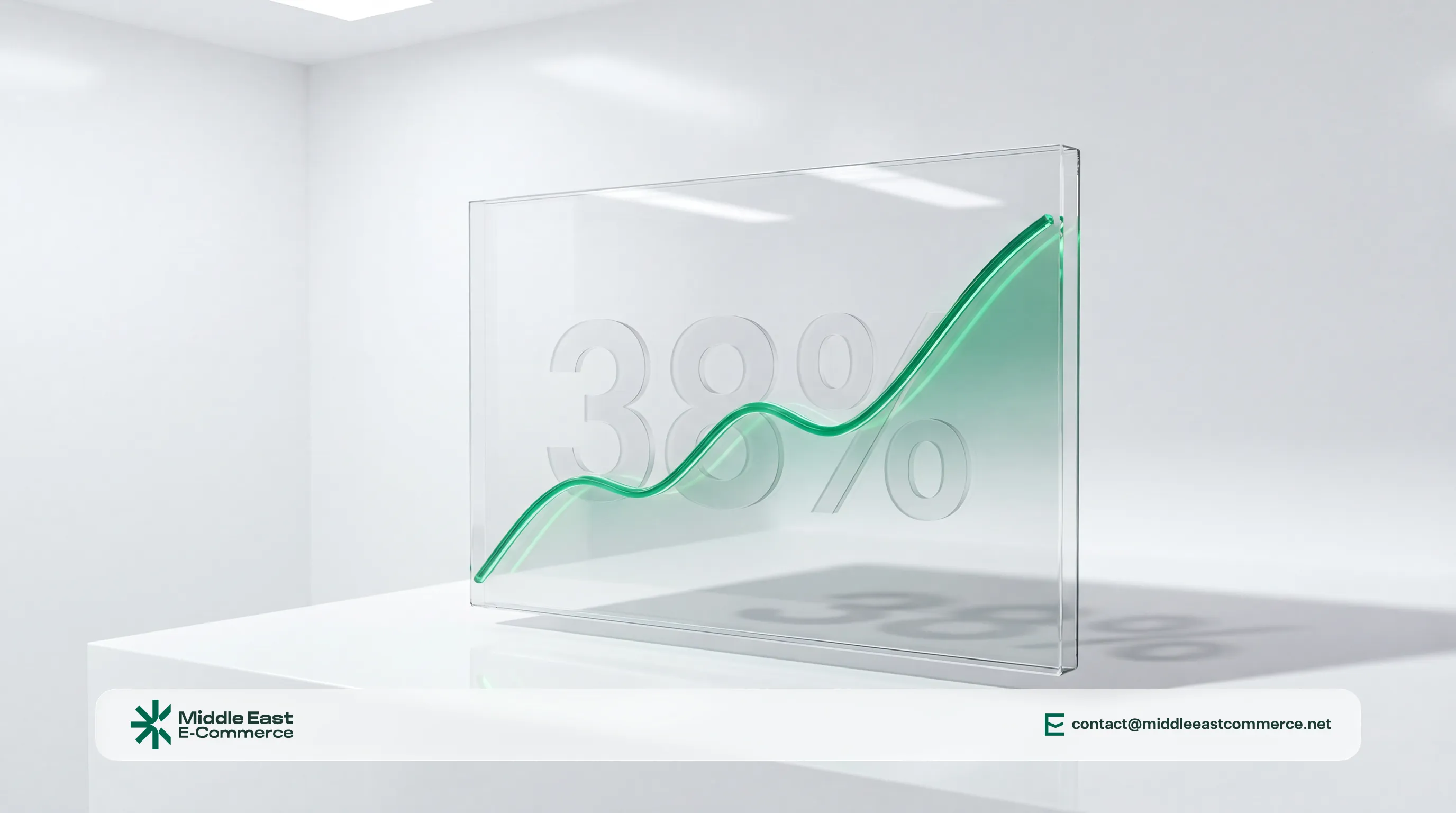
Recent marketing reports and data indicate that customer acquisition cost (CAC) in Gulf e-commerce has increased by more than 30% over the past two years in some sectors. This creates clear pressure on e-commerce stores that rely heavily on paid advertising.
Imagine an online store generating 100 orders per month. With rising acquisition costs, a significant portion of its profit may now be spent just to maintain the same number of customers. This reduces profit margins and slows down overall growth.
This makes improving marketing efficiency a necessity rather than an option. Today, customer acquisition cost (CAC) in Gulf e-commerce is a key indicator of marketing success and a brand’s ability to grow sustainably.
In this article, you will learn how to calculate CAC accurately, why it is rising in the Gulf region, and the most effective strategies to reduce it and increase revenue per customer.
Customer Acquisition Cost in Gulf E-Commerce
Customer acquisition cost is one of the most important KPIs for e-commerce businesses in the Gulf. It measures how efficiently a store spends on marketing to acquire new customers.
Basic formula:
Total marketing spend ÷ Number of new customers
This formula helps determine whether marketing investments are generating healthy returns or need optimization.
Actual CAC vs Healthy CAC
Actual CAC: The real cost of acquiring customers based on current campaigns and performance
Healthy CAC: The level that ensures long-term profitability and sustainable growth
Some channels (like paid ads) increase CAC, while organic channels reduce it. A balanced strategy is required.
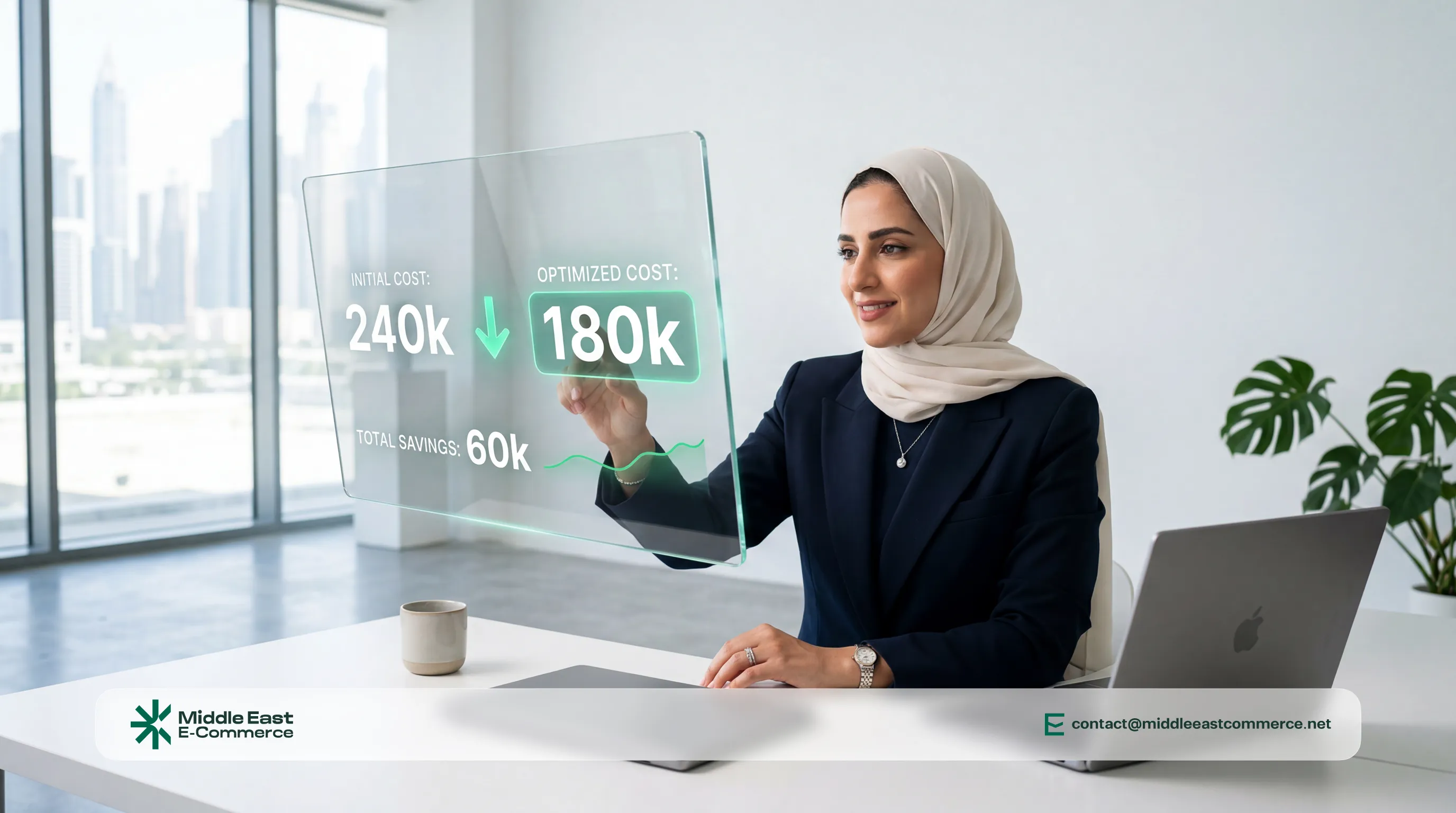
Relationship Between CAC and Lifetime Value (LTV)
The key to profitability is balancing CAC with LTV.
Higher LTV vs CAC = higher profitability
Lower CAC = more efficient growth
Reducing customer acquisition cost (CAC) in Gulf e-commerce is not just about spending less—it’s about improving targeting and conversion quality.
E-commerce CAC Statistics in the Gulf (2025–2026)
The Gulf region has seen major changes in CAC due to increased competition and rising ad costs.
Global CAC increase: 40%–60% (2023–2025)
Average global e-commerce CAC: ~$86 per customer (~320 SAR)
Average CAC in Gulf e-commerce:
180–240 SAR per new customer
This reflects strong dependence on paid advertising and rising cost-per-click (CPC).
Discovr: Best Selling Products Online Gulf 2026: Fashion at 38.7% Leads the Pack
Customer Acquisition Cost Growth: 40% Increase (2023–2025)
Key reasons for rising CAC:
Higher digital ad costs (Meta & Google)
Increased competition for the same audiences
Privacy changes affecting targeting
Audience saturation in paid channels
CAC Comparison: Gulf Countries
Country | CAC Level | Main Reasons | Notes |
|---|---|---|---|
Saudi Arabia | High | Strong competition, high ad spend | One of the most competitive markets |
UAE | Very High | Mature digital ecosystem, high purchasing power | Often the most expensive market |
Kuwait | Medium to Low | Smaller market, lower competition | Better cost efficiency |
CAC by Digital Channels in Gulf E-commerce
Meta Ads (Facebook & Instagram)
Medium to high CAC
High competition
Most widely used channel
Google Ads
High CAC
High purchase intent
Expensive CPC in competitive niches
TikTok Ads
Low to medium CAC
Fast growth channel
Strong performance with creative content
SEO & Content Marketing
Very low long-term CAC
Requires time but highly sustainable
Email & WhatsApp Marketing
Very low CAC
Excellent for retargeting and repeat sales
Influencer Marketing
Highly variable CAC
Depends on influencer quality and audience match
Referral & Loyalty Programs
Lowest CAC
Highest lifetime value impact
Strategies to Reduce Customer Acquisition Cost (CAC)
1–3: Improve Conversion Rates
Optimize landing pages
Improve CRO (Conversion Rate Optimization)
Refine targeting accuracy
4–6: Retargeting Strategies
Focus on warm audiences
Use remarketing campaigns
Leverage email and WhatsApp funnels
7–10: Build Organic Growth Channels
SEO and content marketing
Referral programs
Loyalty systems
These reduce dependency on paid ads and significantly lower customer acquisition cost (CAC) in Gulf e-commerce over time.
CAC Calculator (Practical Tool)
Formula:
CAC = Total marketing spend ÷ New customers
Benchmark in Gulf:
Below 180 SAR → Excellent
180–240 SAR → Average
Above 240 SAR → Needs optimization
15-Point Marketing Efficiency Checklist
Key questions to evaluate your marketing efficiency:
Do you know your exact CAC?
Are you using multiple channels?
Is your conversion rate low?
Are landing pages optimized?
Do you use retargeting?
Do you rely only on cold traffic?
Do you track ROAS regularly?
Do you use SEO?
Do you have content strategy?
Do you use email/WhatsApp marketing?
Do you measure influencer performance?
Do you have referral programs?
Do you compare LTV vs CAC?
Do you monitor ads daily?
Do you run A/B testing?
Explore now: UAE Online Shopping Statistics 2026: 78% of the Population Shops Online
How Platforms Help Reduce CAC
Modern marketing platforms help reduce customer acquisition cos in Gulf e-commerce by:
Centralizing all ad channels
Tracking CAC in real-time
Improving conversion rates
Redistributing budgets automatically
Reducing wasted ad spend
Learn more about: MENA Ecommerce Report 2026: 25 Statistics That Define the Market
FAQ about Customer Acquisition Cost
What is the average CAC in Gulf e-commerce?
Between 180–240 SAR per customer on average.
What is the cheapest acquisition channel?
SEO, referrals, and WhatsApp/email marketing.
What is a healthy LTV to CAC ratio?
At least 3:1.
Why is CAC increasing in the Gulf?
Due to rising ad costs, competition, and targeting limitations.
Conversation
Comments
Be the first to comment.
Leave a comment