

What started as an emergency solution during the COVID-19 pandemic has now become a permanent consumer behavior across the Gulf region. Traditional grocery shopping is no longer the first option, as online grocery retail in the gulf has become an essential part of daily life, driven by convenience, fast delivery, and advanced technological infrastructure.
The sector has witnessed strong growth over recent years. A significant market opportunity still exists for many merchants who have not yet entered this space or have not fully invested in it—especially with the rapid expansion of grocery delivery apps in the Gulf and the increasing reliance on digital ordering.
This gap between demand and supply represents a real growth opportunity for both new brands and traditional retailers transitioning into digital commerce.
In this article, you will discover the evolution of online grocery retail in the Gulf, the main drivers behind its growth, available opportunities for merchants, and how to practically benefit from them.
Online Grocery Retail in the Gulf 2026: Statistics and Market Insights
Market data for online grocery retail in the Gulf in 2026 clearly reflects a rapid transformation in consumer behavior and increasing reliance on digital solutions for purchasing and home delivery of food products.
Growth of Online Grocery Retail in the Gulf Since 2020
Online grocery retail in the Gulf has experienced strong growth since 2020, driven by changes in consumer behavior during the pandemic. According to reports such as Euromonitor, cumulative growth rates reached up to 300%, varying by country.
The UAE and Saudi Arabia recorded the highest expansion rates compared to other Gulf countries.
Rising Consumer Adoption of Online Grocery Shopping
Consumer behavior in the Gulf food market shows a clear shift toward digital channels. The penetration rate ranges between 15% and 20% in some Gulf countries, especially in major cities. This confirms that online grocery shopping is no longer a secondary option but part of daily routines.
Expansion of Online Grocery Market Size (2020–2026)
The online grocery and food retail market in the Gulf has grown significantly, rising from approximately $2–3 billion in 2020 to an estimated $6–8 billion by 2026. This growth is driven by increased demand for delivery services, the rise of digital platforms, and new market entrants intensifying competition.
Learn more about: What Is The Customer Acquisition Cost And How Can You Reduce It in 2026?
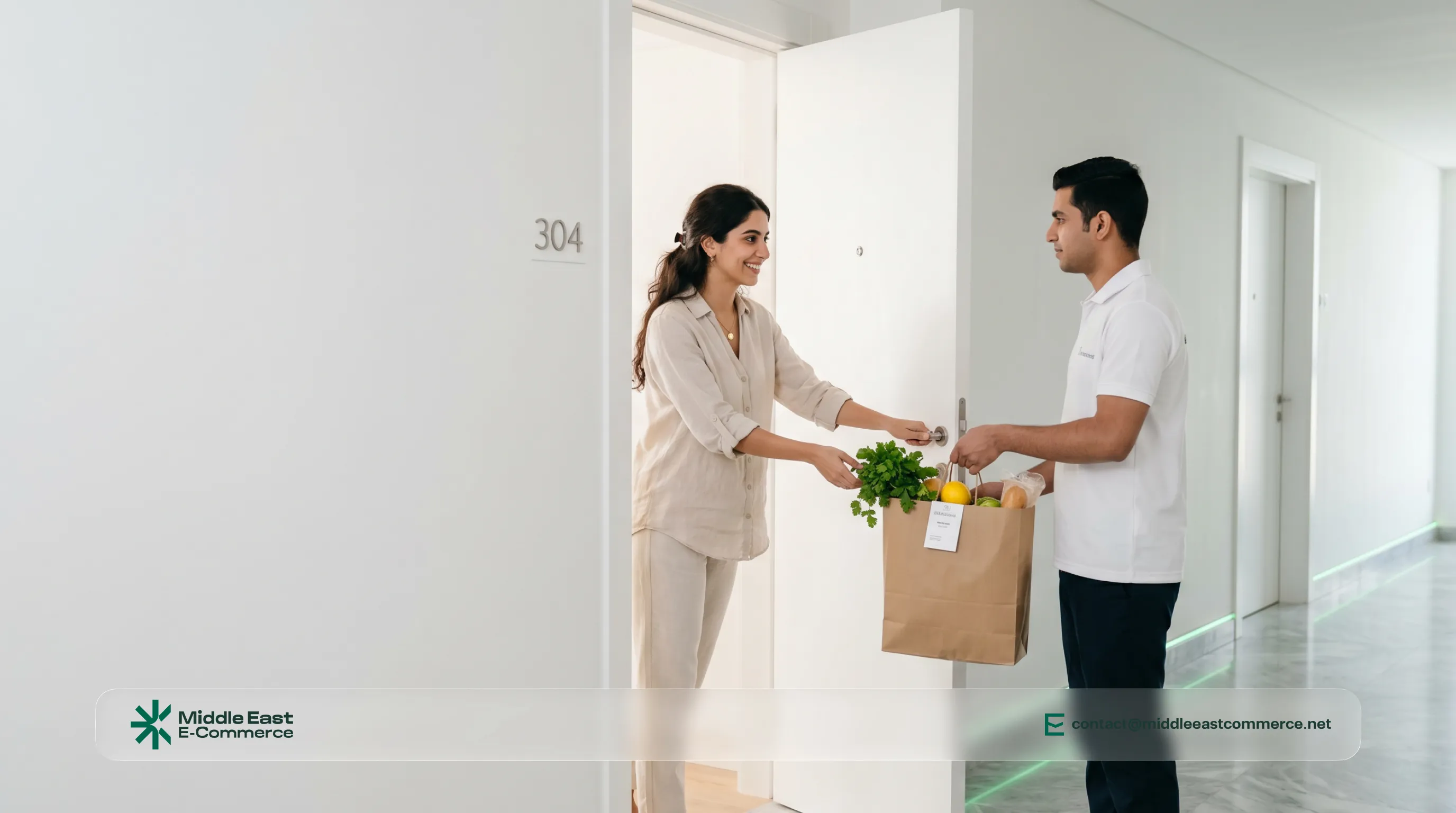
Major Competitors in the Gulf Online Grocery Market
The online grocery retail in the Gulf sector is highly competitive, with regional and global players operating different business models targeting various customer segments based on speed, quality, and product variety.
Competitor | Target Countries | Business Model | Strengths | Market Gaps |
|---|---|---|---|---|
Carrefour (Carrefour Now / Majid Al Futtaim) | UAE, Saudi Arabia, Qatar, Kuwait | Hypermarket + instant delivery app | Wide presence, high trust, large product variety | Inconsistent delivery during peak times |
Majid Al Futtaim (MAF) | UAE, Saudi Arabia | Hypermarket operations + digital platforms | Strong infrastructure, integrated systems | Less focus on ultra-fast delivery |
Nana & Tamimi Markets | Saudi Arabia | Delivery app + retail partnerships | Strong local experience, deep market understanding | Limited regional expansion |
InstaShop & Getir | UAE, expanding Gulf | Aggregation + ultra-fast delivery model | Very fast delivery, Q-commerce model | Limited product variety |
Amazon Fresh | UAE, Saudi Arabia | E-commerce + logistics infrastructure | Strong logistics, advanced UX | Limited geographic coverage |
Carrefour Now and MAF
Carrefour and Majid Al Futtaim are leading players in online grocery retail in the Gulf. They transformed traditional hypermarkets into integrated digital ecosystems by combining physical stores with smart applications. This improves delivery efficiency and supports a wide product range, aligning with changing consumer preferences toward convenience and time-saving.
Nana and Tamimi
Nana and Tamimi represent strong local models in Saudi Arabia’s grocery delivery market. They focus on localized consumer behavior and offer tailored experiences for Saudi households, including healthier food options. They benefit from the rising demand for digital grocery apps and flexible ordering systems.
InstaShop and Getir
These platforms operate within the ultra-fast delivery (Q-commerce) model, focusing on delivering groceries within minutes or under an hour. They reflect a shift in consumer behavior toward instant purchasing and play a key role in improving urban grocery accessibility.
Amazon Fresh
Amazon Fresh leverages global infrastructure and logistics capabilities, offering a wide product range and seamless shopping experience. It also supports growing demand for organic food and subscription-based grocery models in major Gulf cities.
Explore now: The Used Goods Market Statistics in the Gulf 2026
Consumer Behavior in the Gulf Grocery Market
Consumer behavior in online grocery retail in the Gulf is increasingly digital-first. Grocery shopping is no longer limited to physical stores but has become faster and more flexible through apps and delivery platforms.
Peak Times and Ramadan Impact
Grocery orders typically peak in the evening after working hours and during weekends. Ramadan significantly reshapes demand patterns, with spikes before and after Iftar. This leads to increased reliance on pre-orders and fast delivery services.
What Consumers Buy
Common grocery baskets include rice, dairy, bread, and beverages, along with ready-to-eat meals. There is also growing demand for fresh produce and organic food options, especially in Saudi Arabia and the Gulf region.
Decision Factors
Purchasing decisions in online grocery retail in the Gulf are influenced by three main factors:
Price comparison across platforms
Delivery speed
Trust in the brand
While price matters, speed and reliability often dominate final decisions.
Q-Commerce in the Gulf
Q-commerce is rapidly growing in the Gulf, driven by demand for instant delivery and digital convenience.
Leading Q-Commerce Models
These platforms rely on dark stores and micro-warehouses to fulfill orders within minutes, improving efficiency and user experience.
Infrastructure Challenges
Despite rapid growth, challenges remain in logistics infrastructure, especially outside major cities. High operational costs and inventory management complexities also affect profitability.
Opportunities
Q-commerce creates strong opportunities for niche grocery segments, especially organic products, daily essentials, and subscription-based models.
Specialization Opportunities in Online Grocery Retail in the Gulf
Market growth is not only about expansion but specialization within segments.
1. Organic and Healthy Foods
Demand is growing faster than supply, especially in Saudi Arabia and UAE. Consumers increasingly prefer natural and healthy alternatives.
2. Local Gulf Products
There is strong demand for authentic local products that reflect Gulf culture and traditions, creating a competitive advantage for local brands.
3. Subscription Models
Monthly grocery subscriptions are becoming popular, offering convenience and recurring revenue for businesses.
Learn more about: Repeat Purchases and Loyalty in the Online Store: Profit Strategies in 2026
Operational Challenges in Gulf Online Grocery Retail
1. Cold Chain Logistics
One of the biggest challenges, with costs sometimes accounting for 40%–80% of operational expenses.
2. Inventory and Expiry Management
Poor forecasting can lead to product waste and financial losses, especially for fresh goods.
3. Seasonal Planning
Demand can increase up to 3–4x during Ramadan, putting pressure on logistics and supply chains.
How Middle East Commerce Supports Grocery Businesses
The Middle East Commerce platform helps businesses enter and scale within online grocery retail in the Gulf.
Smart Inventory Management
Real-time tracking reduces waste and improves efficiency.
Delivery Integration
Direct integration with delivery companies ensures faster order fulfillment.
Subscription & Recurring Orders
Helps businesses build customer loyalty and stable recurring revenue.
Launch your Gulf digital grocery business with Middle East Commerce today.

FAQ: Online Grocery Retail in the Gulf
1. What is the market size in 2026?
Estimated between $6–8 billion, with Saudi Arabia and UAE holding the largest share.
2. Is there still opportunity for new players?
Yes, especially in niches like organic food, local products, and subscription models.
3. What are the biggest challenges?
Cold chain logistics, inventory management, and seasonal demand spikes during Ramadan.
Conversation
Comments
Be the first to comment.
Leave a comment