
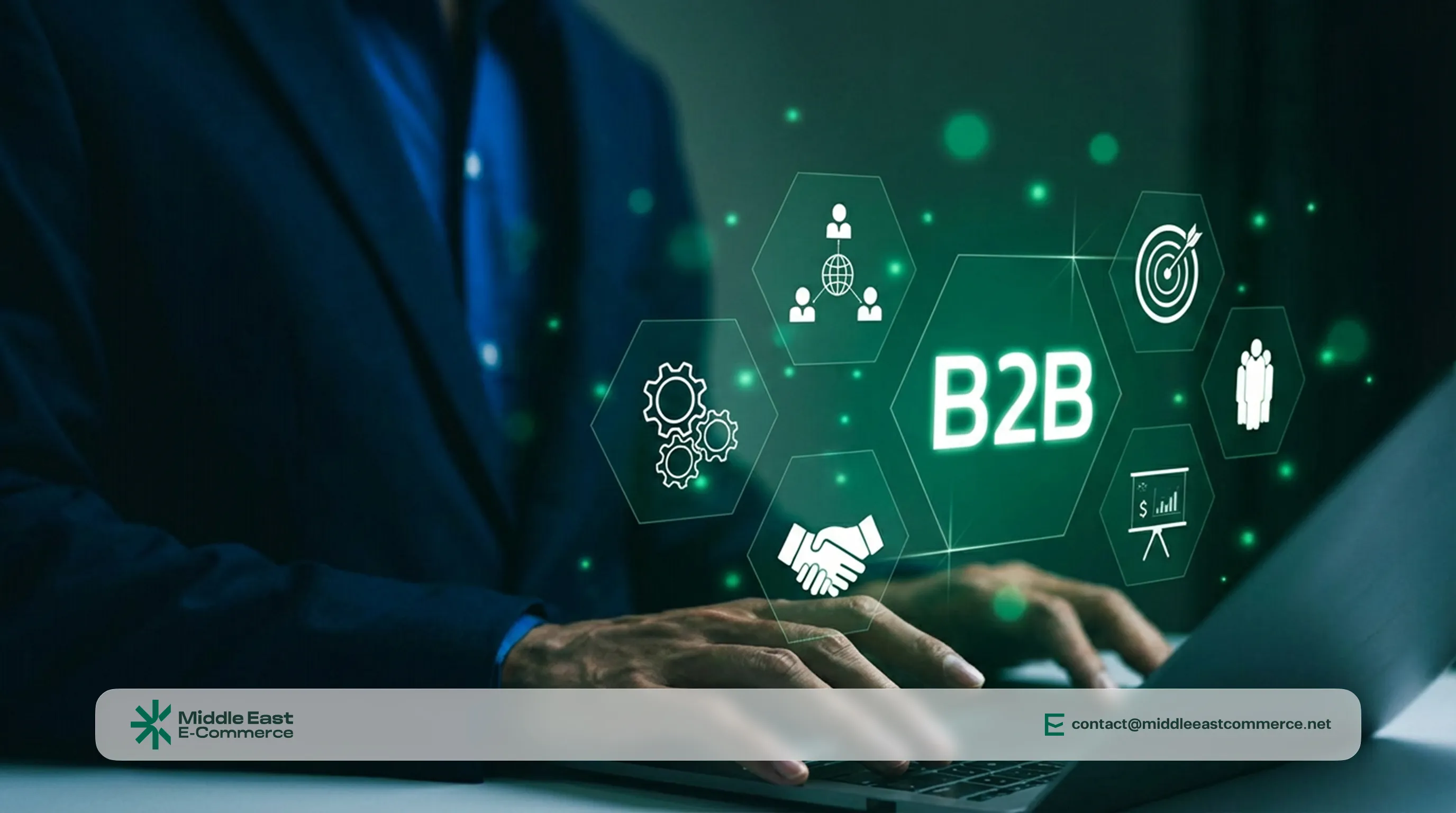
Selling to other businesses online is different from selling to individual customers. B2B e-commerce often involves larger orders, multiple approvals, and ongoing relationships, but it can make your operations more organized and predictable.
This guide explains how e-commerce b2b works, the main business models, pricing and payment methods, order management, and marketing tips. You’ll also see real examples, like handling bulk orders or using platforms such as Middle east to reach business clients across the region.
What Is B2B E-Commerce?
Simply, b2b e commerce means businesses selling products or services to other businesses online, using websites or digital platforms instead of traditional sales methods.

B2B e-commerce definition in plain terms
When you hear b2b e commerce, it simply means businesses selling products or services to other businesses online. Instead of selling to individual shoppers, you’re dealing with companies that may buy in bulk, place repeat orders, or need custom pricing.
For example, if you run a wholesale store that supplies office furniture to companies through a website, that’s a clear case of this model in action.
Where B2B e-commerce fits in the broader e-commerce landscape
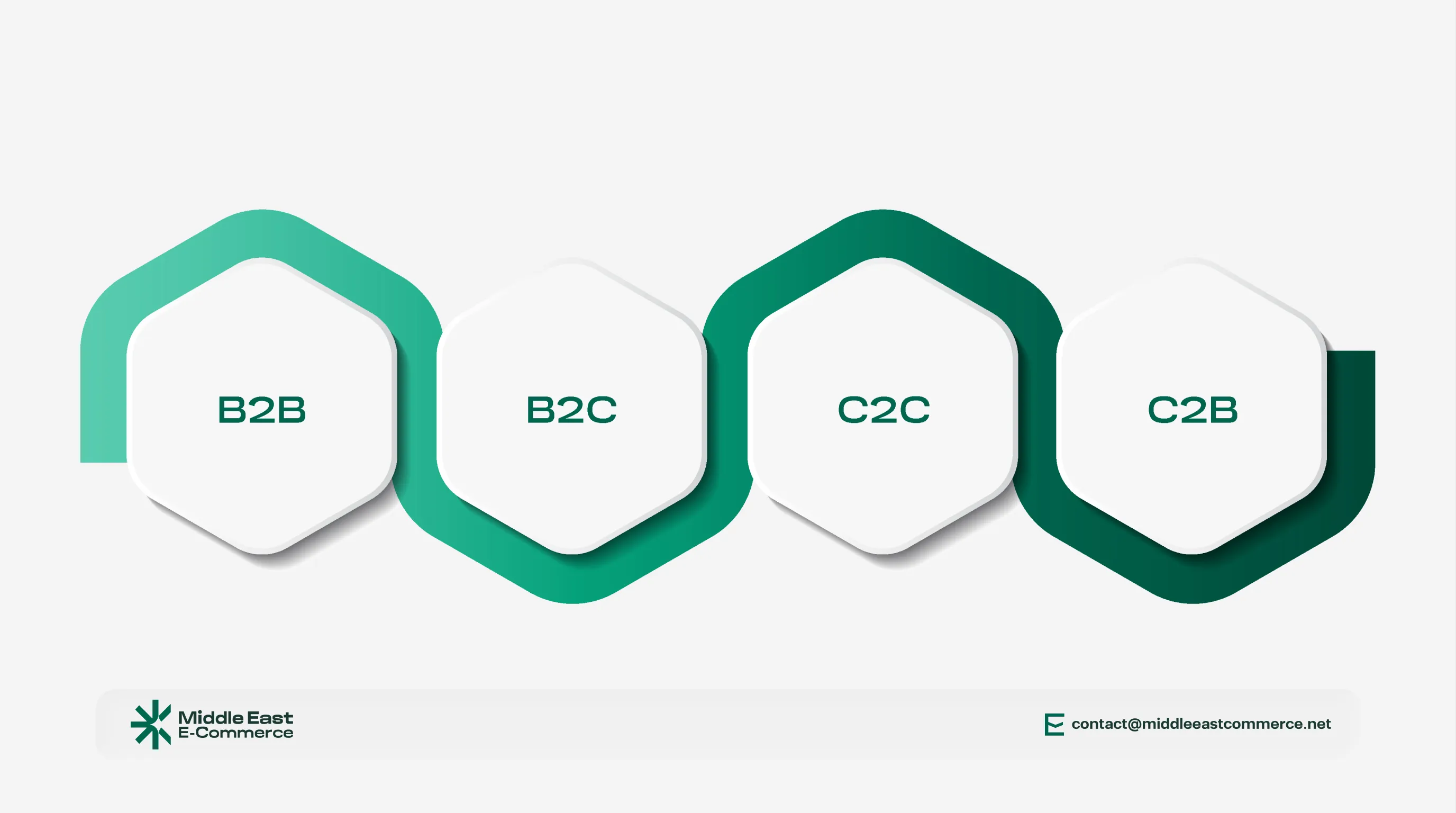
Within the wider world of online selling, business-to-business e commerce sits alongside models like B2C (business to customer) and C2C (customer to customer). The main difference is who you’re selling to. In this case, your customers are other businesses, which usually means longer buying decisions, larger order sizes, and more structured processes.
If you’ve ever seen a company ordering supplies through an online portal instead of a physical catalog, you’ve already seen where this type of e-commerce fits.
Your guide to: E-Commerce Technical Requirements: Infrastructure Guide (2026)
B2B vs B2C: What’s the Real Difference?
When you compare B2B and B2C, the main difference comes down to who you’re selling to and how they buy. In b2b e commerce, your customers are other businesses, which means longer decisions, larger orders, and more structured processes.
On the other hand, B2C focuses on individual buyers who usually want quick, simple purchases.
1- Buyer type and decision-making (teams vs individuals)
In b2b online sales, you’re usually dealing with teams, not just one person. A purchase might need approval from managers, finance, or procurement, which makes decisions more detailed compared to individual shoppers who can buy on their own.
2- Sales cycle length (fast checkout vs approvals)
B2B deals often take longer because of approvals, discussions, and sometimes negotiations. Unlike quick checkouts in B2C, your process in e-commerce b2b may involve multiple steps before the order is confirmed.
3- Pricing structure (fixed vs negotiated/tiered)
In B2C, prices are usually fixed for everyone. But in b2b e commerce, pricing can vary depending on the customer, order size, or long-term agreements, which means you may offer custom or tiered pricing.
4- Ordering patterns (small carts vs bulk/repeat POs)
B2C customers often buy small quantities once in a while. In contrast, business-to-business e commerce usually involves bulk orders or repeat purchases, especially for businesses that restock regularly.
5- Payments (instant vs invoices/net terms)
B2C payments are typically made instantly using cards or digital wallets. In b2b ecommerce payments, businesses may prefer invoices, bank transfers, or payment terms like 30 or 60 days after delivery.
6- Post-sale needs (support, contracts, account management)
After the sale, B2B customers often expect ongoing support, contracts, and dedicated account management. That’s why b2b ecommerce marketing doesn’t stop at the purchase; it continues through building long-term relationships.
Discover now: E-Commerce Seasonal Strategies: to Maximize Sales (2026)
B2B E-Commerce Business Models in 2026
If you’re planning to sell to other businesses, understanding the e-commerce b2b business model helps you choose the right approach for your products and customers. Each model fits a different type of buyer, depending on how they order, pay, and interact with your business.
1- Wholesale and bulk ordering
In b2b e commerce, wholesale is one of the most common models, where you sell large quantities at discounted prices. This works well if your customers need regular stock and prefer buying in bulk to save costs.
2- Procurement and corporate purchasing
This model focuses on companies buying supplies for internal use, like office equipment or raw materials. With business-to-business e commerce, you often deal with structured systems where businesses place orders through approved vendor lists or procurement platforms.
3- Distributor and dealer portals
Here, you create a private portal for your distributors or dealers to place orders, check inventory, and track shipments. Many b2b e commerce platforms support this setup, making it easier to manage multiple partners in one place.
4- Made-to-order and custom quotes
Some businesses don’t sell fixed products but offer customized solutions. In this case, b2b online sales may involve quote requests, negotiations, and tailored pricing before the order is finalized.
5- Subscription and replenishment (repeat supply)
If your customers need regular deliveries, a subscription model can make things easier. With b2b ecommerce payments, you can set up recurring billing or scheduled invoices to keep the supply consistent without repeated manual orders.
6- Hybrid B2B/B2C (one catalog, different pricing)
Some businesses serve both individuals and companies using the same website. In e-commerce b2b, this means showing different prices, minimum order quantities, or payment options depending on whether the buyer is a business or a regular customer.
How B2B E-Commerce Works End to End?
To understand the full process, you need to see how b2b e commerce works from the moment a customer signs up to the point where the order is delivered and supported. Unlike simple online stores, this flow includes multiple steps, approvals, and ongoing interactions between businesses.
1- Company accounts, roles, and permissions
In e-commerce b2b, each company usually has one main account with multiple users. You can assign roles like admin, buyer, or finance, so each person only accesses what they need.
2- Catalog access and customer-specific pricing
Not every customer sees the same products or prices. With b2b e commerce platforms, you can show specific catalogs, discounts, or pricing levels based on the customer’s agreement with you.
3- Quote-to-order workflows (RFQ to PO)
Instead of adding items directly to a cart, many buyers request a quote first. In B2B online sales, this process begins with an RFQ (Request for Quote), followed by negotiation, and concludes with a purchase order.
4- Approval flows inside the buyer organization
Before placing an order, the buyer may need internal approval. In business-to-business e commerce, this step ensures that purchases follow company budgets and policies.
5- Order fulfillment, delivery, and after-sales support
Once the order is confirmed, you are responsible for packing, shipping, and delivery. After that, b2b ecommerce marketing continues through support, handling issues, and maintaining the relationship for future orders.
Learn more about: Best E-Commerce Solutions and Tools in 2026
7 Essential Features Every B2B E-Commerce Platform Must Have
If you’re choosing the right system for your business, understanding what b2b e commerce platforms should include will save you a lot of time and frustration later. The right features help you manage complex orders, different customers, and ongoing relationships without manual work.
1- Customer-specific catalogs and price lists
Not every customer should see the same products or prices. In e-commerce b2b, you need the ability to show tailored catalogs and pricing based on each client’s agreement.
2- Tiered pricing, MOQ rules, and volume discounts
B2B buyers often purchase in large quantities, so pricing needs to reflect that. With b2b e commerce, you can set minimum order quantities (MOQ) and offer better prices for higher volumes.
3- RFQ, quotes, and negotiation support
Many deals don’t start with a direct checkout. In b2b online sales, customers may request quotes, negotiate terms, and finalize details before placing an order.
4- Multi-user accounts and approval workflows
Business customers usually have teams handling purchases. That’s why business-to-business e commerce platforms must support multiple users with different roles and approval steps.
5- Invoicing, tax handling, and document management
Invoices, tax rules, and documents are part of daily operations. With b2b ecommerce payments, you need systems that generate invoices, apply taxes correctly, and store documents for easy access.
6- ERP/CRM integrations and automation
To avoid doing everything manually, your platform should connect with other systems. Good b2b ecommerce marketing and operations rely on syncing data with ERP and CRM tools for smoother workflows.
7- Multi-warehouse, inventory visibility, and backorders
If you manage stock across different locations, visibility is key. In b2b e commerce, you need to track inventory in real time, manage multiple warehouses, and handle backorders when items are out of stock.
Pricing in B2B: How It’s Usually Structured
In b2b e commerce, pricing is rarely a simple fixed number. Businesses often expect tailored rates, discounts, and flexible structures depending on their relationship with you, the size of their orders, or long-term agreements.
1- Contract pricing and negotiated rates
Many companies work with contracts that define special prices. In e-commerce b2b, these negotiated rates ensure that loyal or large customers get consistent, agreed-upon pricing.
2- Tiered pricing by customer group
Not all clients are the same. B2B online sales often use tiered pricing to give different rates to small, medium, or enterprise customers.
3- Volume-based pricing and rebates
The more a business buys, the lower the per-unit cost. With b2b e commerce, you can offer volume-based discounts or rebates to reward customers who place large or repeated orders.
4- Minimum order quantities and pack sizes
Businesses often need specific quantities or packaging. In business-to-business e commerce, setting minimum order sizes or predefined pack options helps streamline ordering and meet client expectations.
How to Manage B2B Payments and Invoicing Effectively?
Handling money in b2b ecommerce payments is more complex than in regular online stores. Businesses expect flexible options, clear documentation, and reliable processes that fit their accounting and procurement systems.
1- Payment methods used in B2B (cards, bank transfer, net terms)
Companies often pay using bank transfers, credit cards, or online payment portals. In e-commerce b2b, many also rely on net terms, allowing them to pay after delivery rather than upfront.
2- Net terms and credit risk basics
Net terms let buyers pay within a set period, like 30 or 60 days. With b2b online sales, you need to evaluate credit risk carefully to avoid late payments or bad debt.
3- Invoices, purchase orders, and tax documentation
Proper documentation is essential. In business-to-business e commerce, invoices, purchase orders, and tax forms must be accurate and easy to access for both you and your clients.
4- Reducing payment failures and disputes
Clear terms, automated invoicing, and reliable payment tracking help minimize errors and disputes. Using b2b e commerce platforms with built-in payment management can save time and keep relationships smooth.
4 Key Strategies to Master B2B Operations and Fulfillment
Running orders in b2b online sales involves more than just shipping a package. You need systems and processes that handle large quantities, multiple locations, and complex client requirements to keep operations smooth.
1- Warehousing, pick/pack for bulk orders
In b2b e commerce, storing and picking bulk orders efficiently is critical. Organized warehouses and clear packing processes help reduce errors and speed up delivery.
2- Shipping rules, freight, and delivery scheduling
Businesses often require freight services, scheduled deliveries, or special handling. With business-to-business e commerce, you need flexible shipping options to meet these demands.
3- Returns and claims in B2B (damages, shortages)
Returns aren’t just about unhappy customers—they often involve damaged goods or shortages. In b2b e commerce platforms, having clear claims and return workflows keeps clients satisfied.
4- Service-level agreements and support workflows
Many B2B clients expect contracts defining response times and support. With b2b online sales, establishing SLAs and structured support workflows ensures reliable service and long-term trust.
B2B E-Commerce Marketing That Actually Works
Marketing in b2b ecommerce marketing focuses on building relationships and generating qualified leads rather than quick impulse purchases. Your strategies need to reach the right businesses and show value clearly.
1- The role of content in B2B demand generation
Sharing informative articles, case studies, or guides helps businesses understand your solutions. In B2B e-commerce, content builds trust and positions your company as a knowledgeable partner.
2- LinkedIn, search, and industry marketplaces
Most B2B buyers research suppliers online. Using b2b e commerce platforms alongside LinkedIn, search ads, or specialized marketplaces can attract the right business customers.
3- Lead magnets and forms vs direct checkout
Instead of immediate checkout, many B2B buyers prefer filling forms, requesting demos, or downloading guides. In b2b online sales, capturing leads first helps you follow up with tailored offers.
4- Retargeting and account-based marketing basics
Targeting specific companies or accounts repeatedly helps increase conversion. With business-to-business e commerce, retargeting campaigns and account-based marketing, ensure your message reaches decision-makers at the right time.
Sales Enablement Inside B2B E-Commerce
Helping your team sell effectively is a big part of b2b e commerce. It’s not just about listing products online it’s about giving your salespeople the tools to close deals faster and more confidently.
1- Product data sheets, specs, and compliance docs
Providing detailed product information, specifications, and compliance documents makes it easier for buyers to evaluate your offerings. In b2b online sales, these resources reduce questions and speed up the decision-making process.
2- Case studies and proof signals that reduce friction
Showing how other businesses have successfully used your products builds trust. In business-to-business e commerce, case studies, testimonials, and certifications act as proof points that ease buyer concerns.
3- Sales-assisted checkout (handoff from marketing to sales)
Sometimes buyers need guidance before completing an order. B2B e commerce platforms often allow a smooth handoff from marketing to a salesperson, ensuring complex purchases are handled correctly.
Explore now: E-Commerce Marketing: Complete Strategy Guide (2026)
5 Metrics and KPIs for B2B E-Commerce
Tracking the right numbers helps you see what’s working and where improvements are needed. In b2b e commerce, KPIs focus on both sales efficiency and customer retention.
1- Lead-to-quote conversion rate
This metric shows how many inquiries turn into formal quotes. With b2b online sales, it helps you evaluate your lead quality and initial engagement efforts.
2- Quote-to-order conversion rate
Once a quote is sent, this measures how many quotes result in confirmed orders. In e-commerce b2b, it highlights the effectiveness of your sales process.
3- Average order value and reorder rate
Tracking how much customers spend and how often they reorder is key. B2B e commerce relies on repeat business, so monitoring these numbers is critical for growth.
4- Time-to-quote and time-to-close
In business-to-business e commerce, measuring the time it takes to provide a quote and close a deal helps identify bottlenecks.
5- Churn/retention for repeat accounts
Keeping existing business customers is more profitable than acquiring new ones. In b2b e commerce platforms, retention metrics show how well you maintain long-term relationships.
How to Choose the Right B2B E-Commerce Platform
Picking the right platform sets the foundation for success. In b2b e commerce, you want a system that fits your current needs but can grow as your business scales.
1- Key questions before you commit
Ask about customization, integrations, payment options, and support. With b2b e commerce platforms, clarity on these points avoids surprises later.
2- A simple decision framework (MVP → scale)
Start with a Minimum Viable Product (MVP) to test your setup, then expand features as your business grows. In b2b online sales, this approach reduces risk and investment upfront.
3- Common implementation mistakes to avoid
Avoid overcomplicating workflows, skipping user training, or ignoring integration needs. In business-to-business e commerce, careful planning ensures smoother launches and higher adoption.
Why Middle East for B2B E-Commerce?
If you’re looking to expand in the region, b2b e commerce in the Middle East offers unique opportunities to streamline sales and reach more business customers efficiently. Platforms designed for this market help you handle complex transactions while keeping operations simple.
1- Unified selling and communication in one system
With the Middle East platform, you can manage product listings, pricing, and customer communication all in one place. This centralization makes it easier to coordinate sales teams and respond quickly to inquiries.
2- Faster deal closure with in-platform messaging
Direct messaging inside the platform helps buyers and sellers negotiate and finalize deals faster. In b2b online sales, this reduces the back-and-forth that usually slows down traditional methods.
3- Cross-border readiness without operational overload
Many businesses want to sell across countries in the Middle East. Using b2b e commerce platforms, you can handle different currencies, taxes, and regulations without adding operational complexity.
4- Performance insights to optimize sales workflows
Analytics and reporting tools in mideast give you visibility into sales performance, helping you identify bottlenecks and improve efficiency. For business-to-business e commerce, this data-driven approach supports smarter decisions and faster growth.
FAQs About B2B E-Commerce
Difference between B2B vs B2C?
The main difference is who you sell to. In b2b online sales, your customers are other businesses, which usually means larger orders, longer decision-making, and custom pricing. B2C targets individual consumers looking for quick and simple purchases.
Is Amazon B2B?
Yes, through Amazon Business, Amazon operates a B2B model. It allows companies to buy in bulk, access business-only pricing, and manage multiple users under one account, making it a practical example of business-to-business e commerce in action.
What are the 4 C’s of B2B?
In b2b e commerce, the 4 C’s often refer to Customer, Cost, Convenience, and Communication. Focusing on these helps you understand your client’s needs, offer competitive pricing, simplify the buying process, and maintain clear communication for smoother business transactions.
Conversation
Comments
Be the first to comment.
Leave a comment